

Labs
Guide to Buy Abbott Rapid Test Kits Online
A detailed B2B buying guide for Indian hospitals and labs on how to buy Abbott rapid test kits online, focusing on specifications, supplier evaluation, and cost.


As procurement heads and senior clinicians, our primary challenge isn't just finding a product; it's securing a reliable supply chain for critical diagnostics. When a patient presents with an undifferentiated fever, especially during monsoon season, having a dependable rapid test kit on hand is non-negotiable. If your goal is to buy abbott rapid test kits online, you need a process that goes beyond a simple price comparison. This guide is a structured framework for making a sound procurement decision for your hospital, clinic, or diagnostic lab.
Your Pre-Procurement Checklist
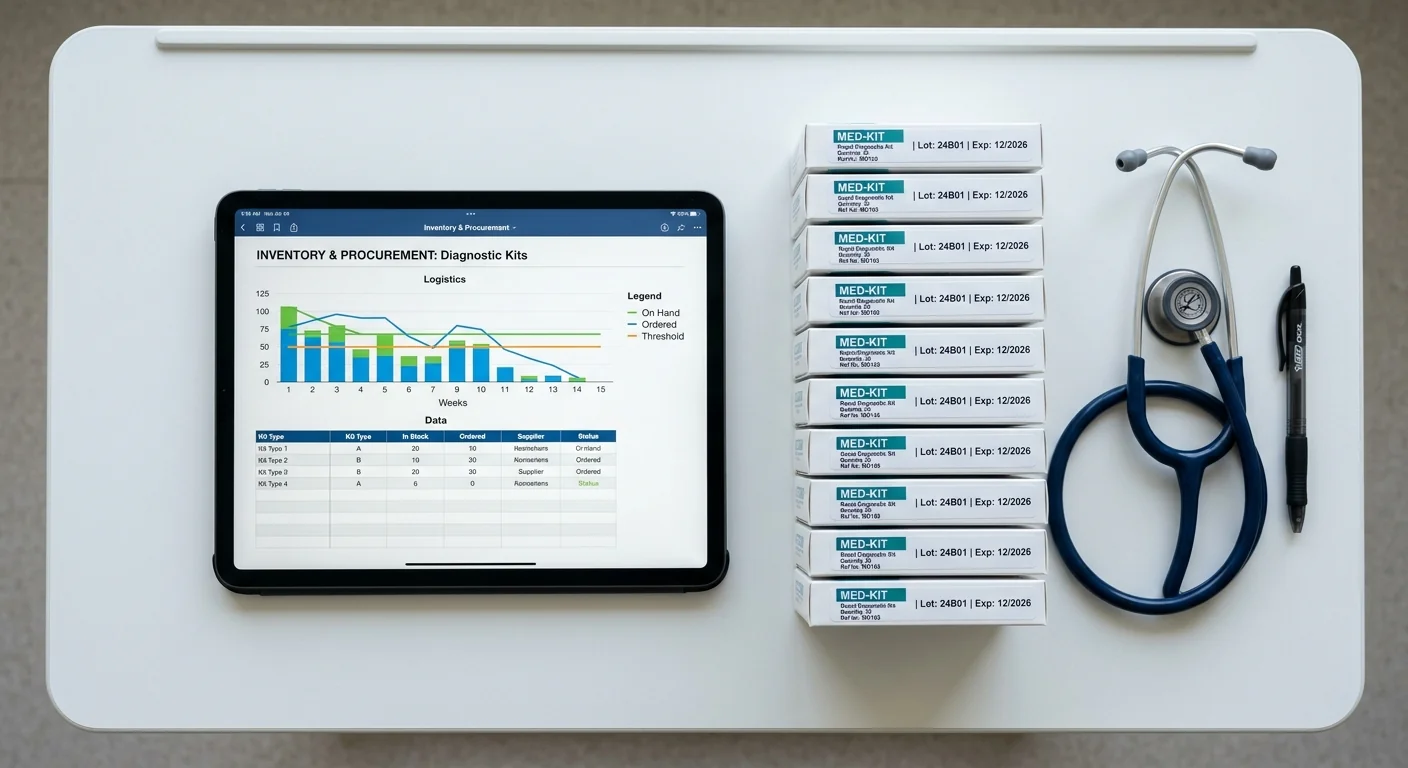 Before you even browse a catalogue, a clear needs assessment prevents over-stocking, under-stocking, and budget misalignment. Run through this internal checklist first.
- Volume Assessment: What is your realistic consumption rate? Calculate your average weekly and monthly usage, factoring in seasonal spikes for diseases like dengue, malaria, and scrub typhus. Plan buffer stock accordingly, but avoid tying up capital in kits that might expire.
- Facility-Specific Use Case: Where will this test be deployed? An OPD screening protocol has different urgency and volume needs than an ICU or a central laboratory. The choice between a qualitative screening rapid card test and a more complex assay depends entirely on its intended point of use.
- Staff Competency: Are your lab technicians, nurses, or clinicians already trained on this specific test format? Factor in time for a quick refresher if you're switching brands or test types. Consistent technique is key to reliable results.
- Inventory & Storage Infrastructure: Do you have the required temperature-controlled storage (e.g., 2-30°C for many kits)? Verify your storage capacity against the bulk order quantity you plan to procure.
Key Specifications to Evaluate in Abbott Diagnostic Kits
Once your internal needs are clear, the next step is a rigorous evaluation of the product specifications. All Abbott products come with detailed documentation; focus on the data that directly impacts clinical outcomes and operational efficiency.
- Clinical Performance: Look for documented sensitivity and specificity percentages. For a test like scrub typhus IgM, high specificity is crucial to avoid false positives that can lead to unnecessary antibiotic use. High sensitivity ensures you don't miss true cases.
- Time to Result: In a busy OPD or emergency setting, the turnaround time is a critical operational metric. Most rapid immunochromatographic tests provide results in 15-20 minutes. Confirm this aligns with your workflow.
- Sample Requirements: Verify the required sample type (serum, plasma, or whole blood) and the precise volume in microliters (µL). This ensures your phlebotomy and lab teams collect appropriate samples, minimising recollection instances.
- Kit Components & Shelf Life: Does the kit contain all necessary reagents, like buffer solutions and sample droppers? A longer shelf life (e.g., 18-24 months) provides greater flexibility for inventory management.
- Regulatory Approval: Ensure the kit has the necessary Indian regulatory approvals, such as a CDSCO license. For instance, the Abbott Tsutsugamushi (D) Global Rapid Card - Pack of 30 Test (AF18FK10) is a widely used and compliant option for detecting antibodies to Orientia tsutsugamushi.
Comparison Criteria Beyond the Quoted Price
The lowest listed abbott tsutsugamushi diagnostic card price is not the full story. A truly cost-effective procurement strategy evaluates the total cost of ownership and clinical value.
| Evaluation Parameter | What to Look For | Operational Impact |
| True Cost-Per-Test | Does the price include buffers, droppers, and controls? Factor in the cost of any items that must be sourced separately. | A low kit price with expensive, separately-sold consumables can drive up the actual cost per patient test. |
| Batch-to-Batch Consistency | Does the supplier guarantee performance across different lot numbers? Reputable suppliers can provide CoA (Certificate of Analysis) data. | Inconsistent batches lead to unreliable results, repeat testing, and a loss of clinical trust in the diagnostic tool. |
| Pack Size & Logistics | Is the pack size (e.g., 30 or 50 tests) appropriate for your consumption rate to avoid wastage from expiry? | Ordering a large pack for a low-volume test results in financial loss when kits expire on the shelf. |
| Supplier Technical Support | Is there a knowledgeable point of contact if your lab team faces issues with a specific batch or result interpretation? | Lack of support can cause significant delays and uncertainty in your diagnostic workflow. |
Evaluating Your Abbott Lab Test Kit Supplier
Choosing the right partner is as important as choosing the right product. Use this checklist to vet any potential abbott lab test kit supplier.
- Authorisation & Traceability: Are they an authorised distributor for Abbott? This is the only way to guarantee authentic products and a secure supply chain.
- Cold Chain Management: For temperature-sensitive items, can they provide evidence of an unbroken cold chain from their warehouse to your facility? This is non-negotiable.
- GST & Documentation: Do they provide proper, timely GST invoices for input tax credit? Clear documentation is essential for your finance and audit teams.
- Delivery Network & TAT: What is their average delivery time to your location? A reliable supplier has a robust pan-India logistics network to ensure you never face a stock-out.
- Ordering Platform: How easy is it to order scrub typhus rapid test card packs or manage repeat orders? A modern B2B platform simplifies re-ordering, tracking, and payment.
Common Pitfalls in Procuring Diagnostic Rapid Tests for Labs
We've all seen these mistakes. Avoiding them is key to maintaining both clinical standards and budget integrity.
- Prioritising Price Over Expiry: A steep discount on a rapid test kit with only 2-3 months of shelf life left is a false economy. You risk being forced to discard expired stock.
- Ignoring Freight & Hidden Costs: Always confirm if the quoted price is inclusive of delivery to your facility. High last-mile shipping charges can negate any unit-price savings. The final scrub typhus test price you pay matters more than the sticker price.
- Sourcing from Unverified Channels: The "grey market" poses a significant risk of counterfeit or poorly stored products, compromising patient safety and clinical accuracy. Always stick to authorised channels.
- Inadequate Record-Keeping: Failing to track lot numbers against patient results makes it impossible to conduct a look-back analysis if a manufacturer issues a batch recall.
Why Source Abbott Products Through MedikaBazaar?
For B2B procurement, a consolidated platform provides distinct advantages over dealing with multiple local vendors. MedikaBazaar is built for the operational needs of healthcare facilities in India.
- Guaranteed Authenticity: We connect you directly with authorised manufacturers and distributors, eliminating the risk of counterfeit products.
- Streamlined Logistics: Our pan-India supply chain ensures reliable, temperature-controlled delivery to your doorstep, whether you're in a metro or a Tier-3 town.
- Transparent B2B Pricing: Get competitive, all-inclusive pricing with clear GST invoicing, simplifying your accounting and enabling you to claim input tax credits without hassle.
- One-Stop Platform: Procure your entire range of diagnostic rapid tests for labs, from the tsutsugamushi global rapid card pack of 30 to consumables and equipment, all in one place.
Equip Your Facility Today
Eliminate the complexities of managing multiple vendors and ensure your clinical team has access to authentic, high-quality diagnostic tools. A streamlined procurement process allows you to focus on what truly matters: patient care.
Make MedikaBazaar your trusted partner for all your medical supply needs. Explore our comprehensive range of Abbott diagnostic kits and equip your lab with confidence.
FAQs

