

Dentist
A Procurement Manager's Evaluation Framework for Class B Autoclaves
A detailed guide for procurement managers on selecting a Class B autoclave. Covers needs assessment, technical specs, compliance, and common procurement pitfalls.


Selecting the right autoclave is a critical decision that directly impacts patient safety, instrument longevity, and operational efficiency. For any facility handling hollow, porous, or complex instruments—standard in dental, ophthalmology, and surgical practices—a Class B autoclave is not an option, but a clinical necessity. Unlike simpler Class N units, a b class autoclave uses a dynamic pre-vacuum and post-vacuum process, ensuring EN 13060-compliant sterilization for the most challenging loads.
This guide provides a structured framework for evaluating and specifying a class b autoclave, moving beyond the spec sheet to address the practicalities of procurement, integration, and long-term performance. We will focus on the criteria that matter in a high-demand clinical setting, using models like the Medtech Medclave Class B Autoclave as a reference point for key features.
Needs Assessment Checklist: Defining Your Sterilization Requirements
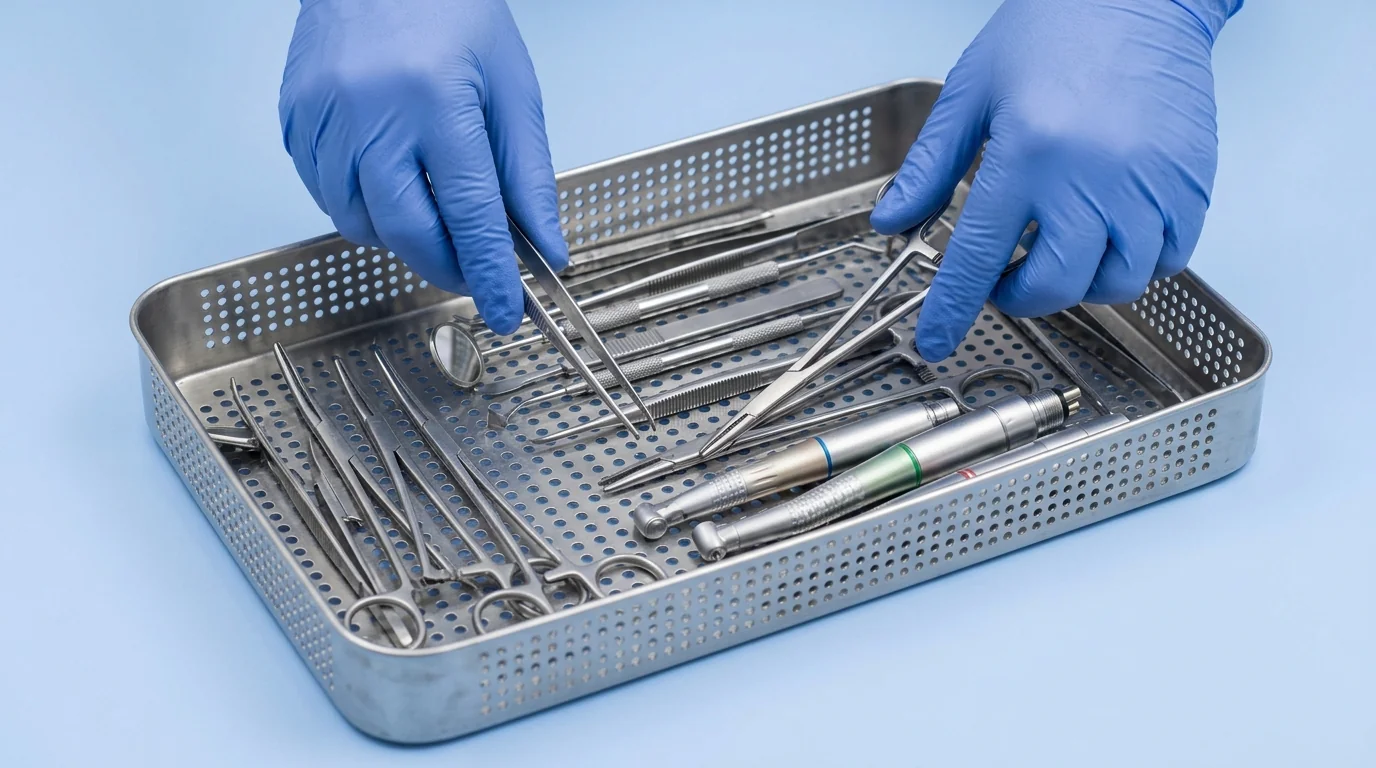 Before evaluating specific models, a thorough internal needs assessment is crucial. This ensures you specify a machine that matches your facility's genuine workload and instrument profile, avoiding over-specification or, more dangerously, under-specification.
- Daily Load Volume: Quantify your throughput. How many sterilization cycles are run on an average day? A busy multi-chair
dental autoclavesetup might require 8-12 cycles, whereas a smaller speciality clinic may only need 3-5. Calculate the total volume of instruments processed daily to determine the necessary chamber capacity and cycle speed. - Instrument Profile: What are you sterilizing? Your instrument mix is the primary determinant for needing a Class B unit.
- Solid, Unwrapped Instruments: (e.g., retractors, simple forceps)
- Hollow "A" & "B" Instruments: (e.g., dental handpieces, phaco probes, suction cannulae, endoscopes)
- Porous Loads: (e.g., surgical gowns, drapes, gauze packs)
- Wrapped Instruments: Instrument sets in sterilization pouches or cassettes.
- Facility Type & Workflow: A multi-speciality hospital's Central Sterile Services Department (CSSD) has different uptime and validation requirements than a standalone dental practice. Consider turnaround time pressures. How quickly do you need instrument sets back in circulation?
- Physical Plant & Utilities:
- Footprint: Measure the allocated space. Tabletop autoclaves have specific dimensional and clearance requirements for ventilation.
- Power: Is a dedicated 15-amp power socket available? Check the manufacturer's power rating (typically 1.8-2.2 kW).
- Water & Drainage: Identify the source for demineralised/distilled water and a suitable drainage point. The quality of water is non-negotiable for the longevity of the machine.
Key Technical Specifications to Evaluate
Once your requirements are defined, use this checklist to compare potential models.
- Chamber Capacity and Construction:
- Volume (Litres): A 23-litre chamber is a versatile standard, accommodating multiple instrument trays or cassettes, suitable for most clinics and small hospital OTs.
- Material: The chamber must be single-piece, medical-grade 304 stainless steel. This prevents corrosion from steam and ensures uniform heat distribution. Avoid lower-grade steel or multi-piece constructions which can develop leaks over time.
- Sterilization Cycle Technology (The Class B Standard):
- Pre-Vacuum System: The core of Class B performance. Look for a system that employs multiple (typically three) fractional vacuum pulses. This process actively removes air from every crevice of hollow instruments and porous packs, allowing for complete steam penetration.
- Post-Vacuum Drying: A deep post-sterilization vacuum phase is essential for active, heated drying. This ensures instrument packs are completely dry upon cycle completion, preventing recontamination and corrosion. Instruments should emerge ready for sterile storage, not damp.
- Control System and Data Logging:
- Microprocessor Control: This is standard for precise management of temperature, pressure, and time parameters throughout the cycle.
- Cycle Data Management: For audit trails and NABH/NABL compliance, data logging is mandatory. Evaluate the options:
- Built-in Thermal Printer: Provides an immediate physical record of cycle parameters.
- USB Port: Allows for digital transfer of cycle data for long-term storage and analysis.
- Safety Mechanisms:
- Mechanical and Electronic Door Lock: The door must be impossible to open while the chamber is pressurised.
- Pressure Safety Valve: A mechanical failsafe to prevent over-pressurisation.
- Over-Temperature Cut-off: Protects both the instruments and the heating element.
- Automated Fault Alarms: The system should clearly indicate any cycle failure with specific error codes.
Regulatory Compliance and Certification: Non-Negotiable Criteria
Certifications are your assurance of the device's safety, efficacy, and manufacturing quality. Do not consider any unit that lacks the following:
- CE Certification with EN 13060 Compliance: This is the definitive European standard for small steam sterilizers and the benchmark for a true
class b autoclave. It validates the machine's ability to sterilize specified load types. - ISO 13485:2016: This certifies that the manufacturer operates under a globally recognized Quality Management System for medical devices. It speaks to consistency, traceability, and quality control in the production process.
Supplier Evaluation Checklist
The long-term reliability of your autoclave depends as much on the supplier as on the machine itself.
- Service Network and AMC:
- Does the supplier have a qualified, factory-trained service engineer in your city or region?
- What are the terms of the Annual Maintenance Contract (AMC) post-warranty? This should include preventive maintenance visits and calibration.
- Warranty:
- Clarify the warranty period (e.g., 1 year, 2 years) and what it covers. Specifically ask about critical components like the vacuum pump, heating element, and chamber.
- Installation and Training:
- On-site installation and comprehensive operational training for your clinical staff should be included. Proper user training is the single most important factor in preventing user-error-related breakdowns.
- Spare Parts Availability:
- Confirm the availability and lead time for essential consumables like door gaskets, bacteriological filters, and printer rolls. A machine down for weeks waiting for a simple gasket is a significant operational failure.
Common Procurement Pitfalls to Avoid
- Pitfall 1: Confusing Class N with Class B. Procuring a less expensive Class N (gravity displacement) autoclave for a dental or surgical setup is a critical clinical error. It cannot reliably sterilize handpieces, cannulated instruments, or wrapped loads, posing a significant infection control risk.
- Pitfall 2: Neglecting Water Quality. Using tap water or inadequately purified RO water will cause rapid scaling of the chamber, pipes, and sensors, leading to premature failure and voiding the warranty. This makes the decision to order medtech autoclave with water distiller included a sound operational choice, simplifying the ecosystem and ensuring compliance from day one.
- Pitfall 3: Overlooking Total Cost of Ownership (TCO). The initial acquisition is only part of the equation. Factor in the cost of consumables, AMCs, and potential downtime. A slightly higher initial investment in a reliable machine with strong local support often yields a lower TCO.
- Pitfall 4: Inadequate Staff Onboarding. The most advanced autoclave can fail cycles if loaded incorrectly or operated improperly. Ensure the supplier provides hands-on training and that your facility develops a standard operating procedure (SOP) for its use.
Equip Your Facility Today
A systematic evaluation process ensures your facility is equipped with an autoclave that not only meets regulatory standards but also supports a safe and efficient clinical workflow. By applying this framework, you can confidently select a Class B sterilization solution that serves as a cornerstone of your infection control protocol. For detailed specifications on compliant and reliable autoclaves, explore the validated range of medical equipment on MedikaBazaar.
FAQs

