

Dentist
Evaluating the Right Dental Surgical Motor: A Procurement Checklist
A detailed guide for procurement managers on selecting a dental surgical motor. Covers needs assessment, key specifications, and common procurement pitfalls.


Selecting a dental surgical motor for your facility is a decision with direct clinical and operational consequences. Unlike routine equipment, this device's performance in torque accuracy, reliability, and sterility is non-negotiable for procedural success, particularly in implantology. This guide moves beyond brochure features to provide a structured framework for procurement teams and senior clinicians to evaluate these systems based on first principles.
Needs Assessment: Defining Your Clinical and Operational Requirements
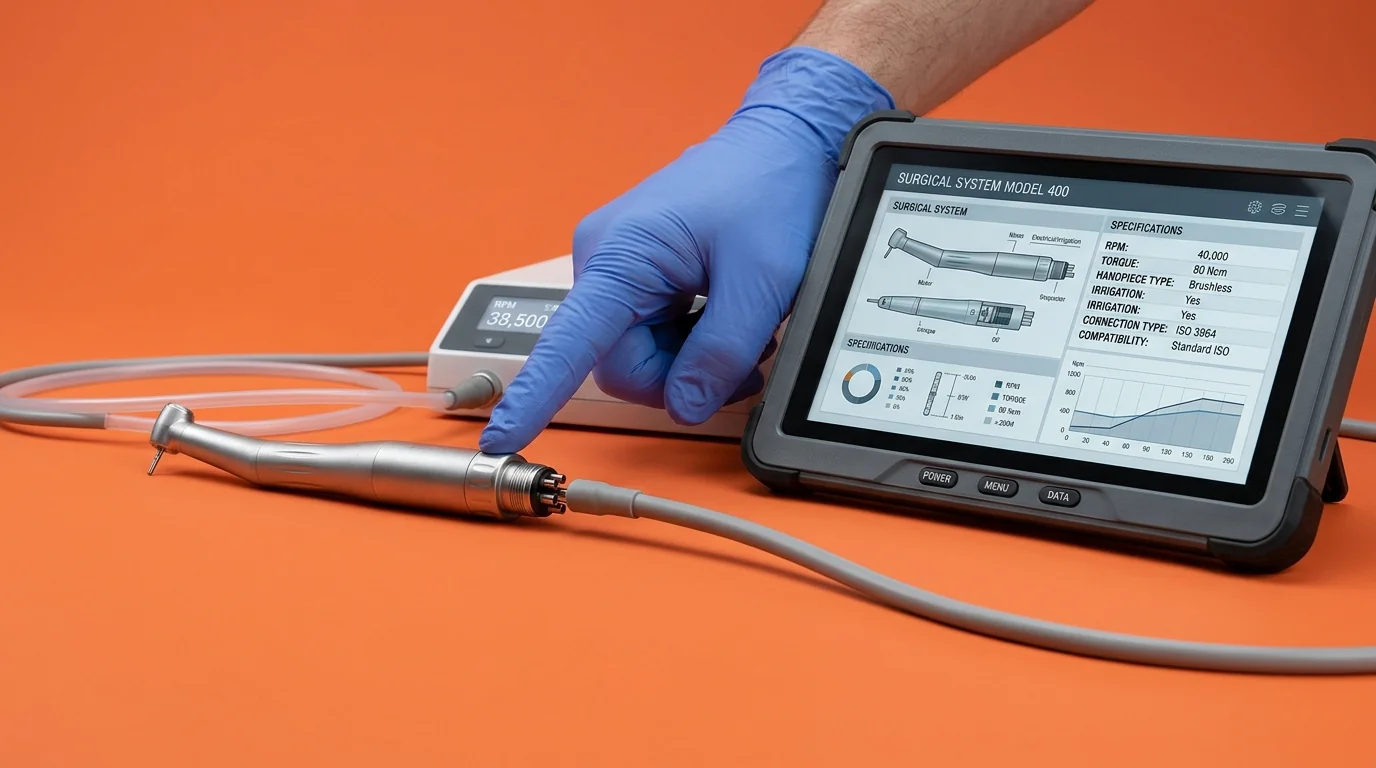 Before comparing models, a thorough internal needs assessment is critical. This initial step ensures the final selection aligns perfectly with your facility’s specific demands.
- Primary Clinical Use-Case: What procedures will the motor be used for? Implantology, which requires precise high torque at low speeds, has different requirements than maxillofacial or periodontal surgery. Define the primary application, as this dictates the necessary torque and speed ranges.
- Anticipated Procedure Volume: A multi-specialty hospital department performing several implant placements daily requires a motor built for higher duty cycles and durability than a general practice that performs one or two such procedures a week.
- Facility Type and Layout: A large hospital’s dental OT may have different space and portability needs compared to a compact private clinic. Consider the unit's footprint, cart design, and ease of movement between operatories.
- Existing Equipment Ecosystem: Evaluate compatibility with your current handpieces. Is the motor connection a standard E-type? Assess compatibility with your existing sterilisation protocols; are the motor and cable assembly fully autoclavable?
- Operator Profile: Will the primary users be experienced implantologists or general dentists expanding their scope of practice? An intuitive user interface with pre-set, customisable programs can significantly reduce the learning curve and improve procedural efficiency.
Core Specifications to Scrutinise on the Datasheet
Once your requirements are clear, you can begin to assess the technical specifications of various models. Look past the marketing and focus on these critical performance indicators.
- Torque Control (Ncm): This is the single most important parameter for implant dentistry. The motor must provide precise, stable, and real-time torque delivery. Look for a wide adjustable range, typically from 5 Ncm to 80 Ncm. For implant placement, a range of 20-45 Ncm is common. Crucially, verify that the unit has an automatic torque-limiting feature to prevent bone compression necrosis.
- Speed Range (RPM): A versatile motor offers a broad speed range. You need high speeds (e.g., up to 40,000 RPM) for efficient osteotomy and bone preparation, and very low, stable speeds (e.g., 15-30 RPM) for the final implant placement.
- Motor Technology (Brushed vs. Brushless): Brushless DC motors are now the standard for any serious surgical application. A brushless micro motor dental unit delivers higher torque, especially at low speeds, with significantly less vibration and noise. They also have a longer operational life and require minimal maintenance compared to their brushed counterparts.
- Irrigation System: An integrated sterile irrigation system is essential to prevent thermal damage to the bone during drilling. Evaluate the pump's flow rate adjustability (typically up to 100-150 mL/min) and whether it supports both internal and external irrigation on the handpiece.
- User Interface and Control: The display should be large, clear, and easy to read even in low-light OT conditions. A system with customisable, savable programs for different implant systems or procedures streamlines workflow. The foot pedal should be multi-functional, allowing hands-free control of speed, torque, irrigation flow, and program selection.
Beyond the Specs: Evaluating Quality, Compliance, and Ergonomics
Technical specifications only tell part of the story. The physical attributes and regulatory standing of the device are equally important for long-term institutional use.
- Materials and Sterilisation: The motor, cable, and handpiece attachments must be fully autoclavable. Confirm the manufacturer's specified sterilisation parameters (temperature and duration) and ensure they align with your facility’s CSSD protocols. The main console should be made of a durable, medical-grade polymer that is easy to disinfect.
- Regulatory Compliance: For institutional procurement, non-negotiable certifications include CE marking, which indicates conformity with health and safety standards within the EEA, and ISO 13485 certification for the manufacturer, which specifies requirements for a quality management system for medical devices. This documentation is essential for internal audits.
- Ergonomics and Illumination: Consider the weight and balance of the handpiece and motor assembly. A lightweight, well-balanced unit reduces operator fatigue during long procedures. A key feature to look for is integrated fiber-optic LED illumination, which provides a clear, shadow-free view of the surgical site. A model like the Woodpecker Implant-X Fiber Optic Implant Motor - Without API Sinus Lift Kit integrates this feature, which is becoming a standard expectation for complex procedures.
Common Procurement Pitfalls to Avoid
Steering clear of these common mistakes can prevent significant operational headaches and ensure a better return on investment.
- Pitfall 1: Prioritising Initial Outlay Over Total Cost of Ownership: A lower-priced unit may use expensive proprietary irrigation tubing or have a shorter service life. Factor in the long-term costs of consumables, service, and potential downtime when making your evaluation.
- Pitfall 2: Overlooking After-Sales Support: Before finalising, clarify the terms for installation, clinical team training, and ongoing technical support. Is prompt, local service available for calibration and repairs? A non-functional motor can bring high-value procedures to a halt.
- Pitfall 3: Assuming Universal Handpiece Compatibility: While most motors use a standard E-type connection, optimal torque transmission is often achieved with the manufacturer's recommended handpieces. Using incompatible handpieces can lead to inaccurate torque delivery and premature wear.
- Pitfall 4: Neglecting Consumables Availability: Verify that essential consumables like irrigation lines and replacement parts for the foot pedal or motor cable are readily and reliably available from your supplier.
Equip Your Facility Today
A systematic approach to evaluating a dental surgical motor ensures your facility is equipped with a device that is not only clinically effective but also operationally sound and reliable for years to come. By focusing on your specific needs and scrutinising key performance indicators, you can make an informed decision that supports the highest standards of patient care.
For detailed specifications on a range of surgical systems, including those from leading brands like Woodpecker dental, procurement teams can explore the comprehensive catalogue available on MedikaBazaar.
FAQs

