

Labs
Evaluating the Oscar Typhoid Rapid Card for Institutional Diagnostics
A technical guide for procurement managers on evaluating the Oscar Typhoid Rapid Card (30 pack) for clinical use, covering sensitivity, specificity, and operational workflow.


In any high-volume outpatient department (OPD), casualty, or peripheral clinic, the challenge with febrile illnesses is consistent: we need a rapid, reliable differential diagnosis to guide initial management. For suspected enteric fever, waiting 3-5 days for a blood culture result, while being the gold standard, is often not operationally feasible for immediate decision-making. This is where a well-validated rapid diagnostic test becomes a critical tool in our clinical arsenal.
This guide provides an operational and clinical breakdown of the oscar typhoid rapid card 30 pack, focusing on the evaluation criteria that matter for institutional procurement and deployment. We will look beyond the product name to the underlying technology, performance metrics, and workflow integration necessary for effective use in an Indian healthcare setting.
The Clinical Rationale for Rapid Immunochromatographic Typhoid Testing
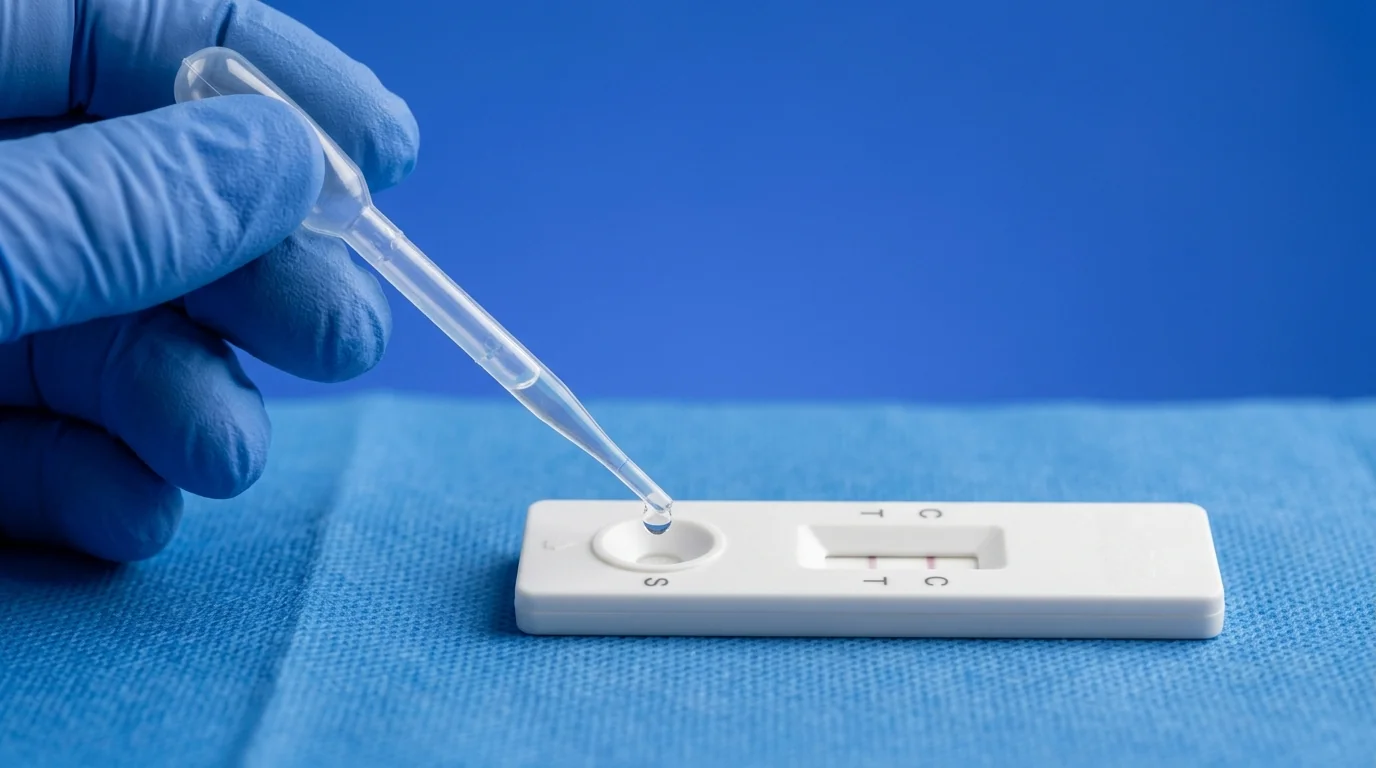 Enteric fever, caused by Salmonella enterica serovar Typhi, remains a significant public health concern. Traditional diagnostics present distinct operational challenges. Blood culture, while definitive, has a long turnaround time and its sensitivity can be reduced by prior antibiotic use. The Widal test, while widely used, suffers from a lack of specificity due to cross-reactivity with other non-typhoidal salmonellae and other infectious agents, making interpretation difficult.
Rapid immunochromatographic tests (ICTs) address this diagnostic gap. They function as a crucial first-line screening tool, providing a presumptive diagnosis within minutes. This allows clinicians to:
- Make informed, timely decisions on patient management and potential initiation of therapy.
- Improve antibiotic stewardship by avoiding empirical treatment for non-typhoidal fevers.
- Facilitate rapid screening during localised outbreaks or in resource-limited settings like health camps.
These tests do not replace the gold standard but act as an indispensable aid for early case identification, significantly impacting patient outcomes and public health surveillance.
Deconstructing the Oscar Typhoid Card: Mechanism of Action
Understanding the technology is key to proper evaluation. The Oscar Typhoid Rapid Card is a solid-phase immunochromatographic assay. It is designed for the qualitative and differential detection of specific IgM and IgG antibodies against Salmonella typhi in human whole blood, serum, or plasma.
The clinical significance lies in its ability to differentiate between antibody classes:
- IgM (Immunoglobulin M): The presence of IgM antibodies typically indicates a recent or acute primary infection. This is the most critical marker for identifying an active case of typhoid fever.
- IgG (Immunoglobulin G): The presence of IgG antibodies, in the absence of IgM, may suggest a past infection or a chronic carrier state. Concurrent IgM and IgG can be seen in the course of an active infection.
This differential detection provides more clinical context than a single-antibody test, helping to distinguish a new infection from a past exposure, which is particularly useful in endemic regions. Each kit contains the necessary components—test cassettes, buffer solution, and sample droppers—for a self-contained testing process.
Key Evaluation Criteria for Your Facility
When specifying a typhoid test kit for your institution, move beyond the basic product description and assess it against these clinical and operational benchmarks.
Clinical Performance Metrics
- Sensitivity: This refers to the test's ability to correctly identify patients who have the disease (true positive rate). High sensitivity is non-negotiable for a screening tool to minimize the risk of missing active infections.
- Specificity: This is the test's ability to correctly identify patients who do not have the disease (true negative rate). High specificity is crucial to avoid false-positive results, which can lead to unnecessary antibiotic prescription, patient anxiety, and misdirection of diagnostic resources. Always review the sensitivity and specificity data provided by the manufacturer in the package insert against established reference methods.
Operational Workflow Integration
- Turnaround Time (TAT): The Oscar card provides results in approximately 15-20 minutes. Evaluate how this rapid TAT integrates into your patient flow, especially in busy OPDs or emergency settings where quick decisions are paramount.
- Sample Requirement: The test is validated for use with serum, plasma, or whole blood. The ability to use a small volume of whole blood from a fingerprick makes it exceptionally useful for point-of-care testing where a full phlebotomy setup may not be immediately available.
- Storage and Stability: These kits are typically stored at room temperature (e.g., 2-30°C). This is a significant logistical advantage, eliminating the need for cold chain maintenance and making the kits suitable for use in outreach programs, mobile medical units, and clinics with limited refrigeration capacity.
Packaging and Supply Chain
- Pack Size: The availability of 30 pack typhoid screening kits offers a practical inventory unit. This size is large enough to be efficient for a small to medium-sized facility's weekly or monthly consumption but small enough to minimize the risk of expiry and wastage compared to larger bulk packs, especially if test volumes fluctuate.
- Shelf Life: A long shelf life (typically 18-24 months) is a key procurement consideration, allowing for better inventory management and reducing financial loss due to expired stock.
- Supplier Reliability: Ensuring a consistent supply chain is critical. Partnering with a recognized oscar diagnostic supplies supplier guarantees access to authentic products and reliable stock availability, preventing disruptions to your diagnostic services.
Standard Operating Procedure (SOP) and Best Practices
To ensure result accuracy and reproducibility, strict adherence to the testing protocol is mandatory. Your lab team should internalize these steps as part of their standard procedure.
- Pre-Analytical: Ensure the test device, buffer, and patient sample are at room temperature before starting the test. Clearly label the cassette with the patient ID.
- Analytical:
- Using the provided micropipette or dropper, add the specified volume of sample (e.g., 10μL for serum/plasma or 20μL for whole blood) to the sample well (S) of the cassette.
- Immediately add 2-3 drops of the supplied assay buffer into the buffer well (B).
- Start a timer. Do not move or disturb the cassette during the incubation period.
- Post-Analytical:
- Read the results at the time specified in the instructions (e.g., 15 minutes). Do not interpret the result after the recommended time, as faint lines may appear later, leading to a false-positive reading.
- Interpretation:
- Valid Test: The Control (C) line must always appear. If it doesn't, the test is invalid and must be repeated with a new kit.
- Negative: Only the C line appears.
- IgM Positive: Both C and IgM lines appear.
- IgG Positive: Both C and IgG lines appear.
- IgM and IgG Positive: C, IgM, and IgG lines all appear.
- Reporting: Always report the qualitative result (e.g., "IgM Positive, IgG Negative") and add a mandatory disclaimer that this is a screening test. Clinical correlation and confirmatory tests are advised.
- Disposal: Dispose of the used cassette and sample materials as per your facility's biomedical waste management guidelines.
For detailed procedural steps, always refer to the package insert provided with the Oscar Typhoid Rapid Card - Pack of 30 Tests.
Integrating Rapid Tests into a Broader Diagnostic Strategy
It is essential to position this typhoid test kit correctly within your facility's overall diagnostic algorithm. It is a powerful screening tool, not a standalone confirmatory test. When integrated thoughtfully, it enhances the utility of your entire portfolio of diagnostic kits.
For instance, in a patient presenting with fever of unknown origin for 4-5 days, a positive IgM result from a rapid card can justify the initiation of targeted antibiotic therapy while a blood sample is sent for culture and sensitivity. This approach balances immediate clinical need with the precision of gold-standard diagnostics. Similarly, for facilities evaluating a range of point-of-care solutions, this test can be considered alongside an Other rapid card for diseases like malaria or dengue, creating a comprehensive fever panel.
Equip Your Facility Today
Selecting the right diagnostic tools is fundamental to delivering high-quality patient care. By carefully evaluating the clinical performance, operational fit, and procedural requirements of rapid screening tests like the Oscar Typhoid card, you can enhance your facility's diagnostic capabilities, improve patient turnaround times, and support effective clinical decision-making.
For your facility’s needs, explore the comprehensive range of laboratory and diagnostic supplies available on MedikaBazaar to ensure your teams are equipped with reliable and effective tools.
FAQs

