

Dentist
Evaluating the High-Speed Airotor: A Clinician's Operational Checklist
A technical guide for clinicians and procurement managers on selecting and maintaining a high-speed airotor handpiece. Covers key specs, chuck types, and operational best practices.


In any dental practice, the high-speed airotor is not just a tool; it's the primary instrument for a vast range of restorative procedures. From routine cavity preparations to complex crown cutting, its performance directly impacts clinical efficiency, precision, and patient outcomes. For procurement managers and senior clinicians, selecting the right airotor handpiece involves looking beyond the top-line RPM figures. It requires a detailed assessment of its engineering, ergonomics, and long-term operational viability. This guide provides a technical framework for evaluating this essential piece of dental equipment from a peer-to-peer, operational perspective.
Deconstructing the Airotor: Core Components and Function
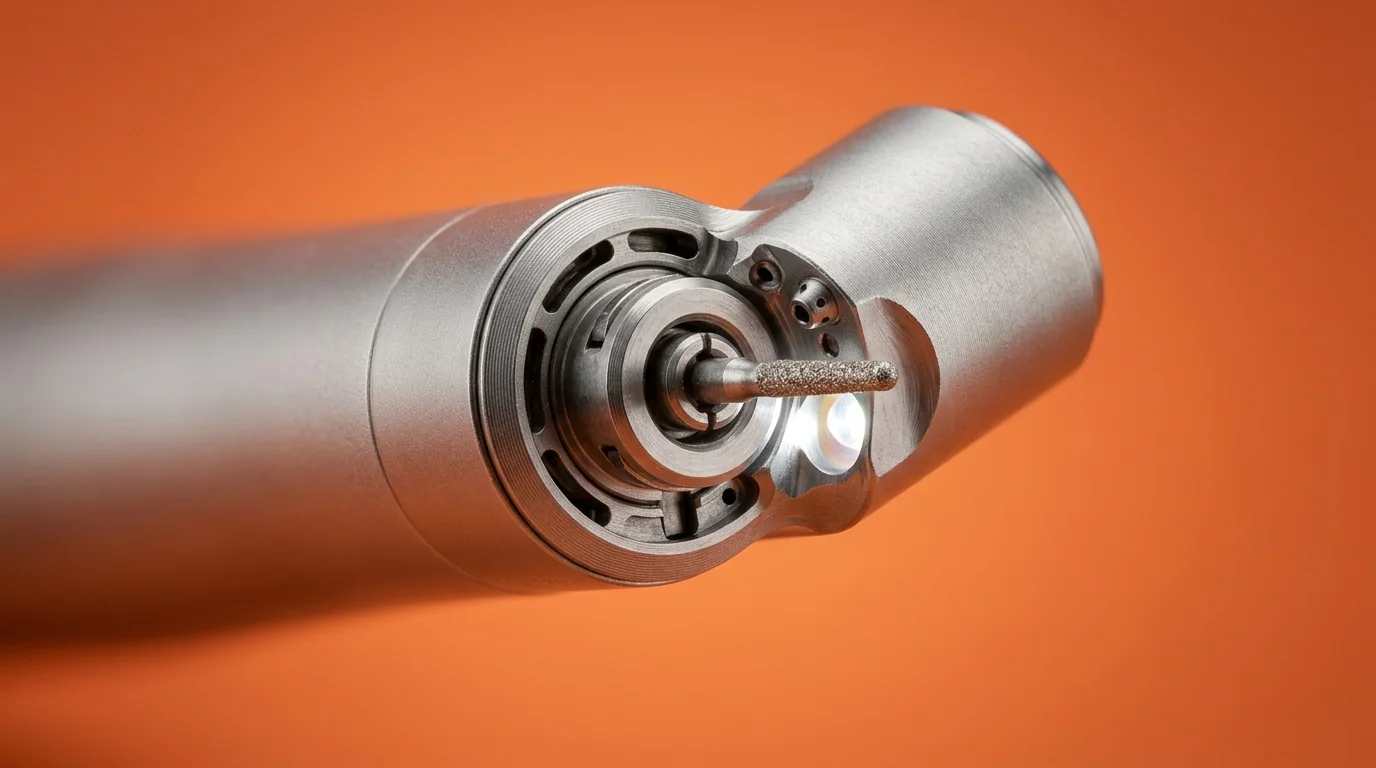 Understanding the mechanics of an airotor is fundamental to making an informed procurement decision. At its core, the device is a precision-engineered air turbine. Compressed air from the dental unit is channelled through the handpiece body, spinning a small turbine-impeller assembly housed in the head at speeds between 300,000 and 450,000 RPM. This rotation is transferred to the dental bur via a friction-grip chuck.
The primary components to understand are:
- Head: Houses the turbine, bearings, and chuck mechanism. Its size and angle are critical for access and visibility.
- Turbine/Cartridge: The "engine" of the handpiece, comprising the impeller and bearings. This is the most critical component for performance and is often replaceable.
- Chuck: The mechanism that holds the bur. Modern systems are predominantly push-button for rapid, tool-free changes.
- Body/Shell: The casing of the handpiece, affecting grip, balance, and ergonomics.
- Conduits: Internal channels for directing air to the turbine and for routing air and water to the spray ports for cooling.
- Coupler: The connector that attaches the handpiece to the dental unit's hose, standardising the air and water connections.
Key Evaluation Criteria for Institutional Procurement
When specifying a new high-speed airotor, move past the marketing materials and focus on these tangible, performance-defining characteristics.
Turbine and Bearing Type The longevity and smoothness of a handpiece are dictated by its bearings.
- Steel Bearings: The traditional standard, offering good performance. They are, however, more susceptible to wear and tear from repeated sterilisation cycles and can generate more operational heat.
- Ceramic Bearings: Increasingly the preferred choice. They are harder, lighter, and more resistant to thermal expansion than steel. This results in lower friction, less heat generation, reduced noise, and a significantly longer operational lifespan, justifying their position in premium models.
Chuck Mechanism The method for changing burs is a major factor in clinical workflow efficiency.
- Wrench/Bur Tool: Requires a separate tool to tighten or loosen the chuck. This method is slower and becoming less common.
- Push-Button Chuck: The current standard for professional use. A simple press of a button on the back of the head releases the bur. This allows for swift, one-handed bur changes, saving valuable chair time during procedures.
Illumination: Enhancing Clinical Visibility Proper illumination of the operating site is non-negotiable.
- Non-Optic: No light source. Relies entirely on the overhead dental light.
- Fibre-Optic: Transmits light from an external source in the dental unit down glass fibres in the handpiece. Provides good illumination but fibres can degrade over time.
- Self-Generating LED: The modern benchmark. A miniature dynamo in the handpiece uses the drive air to power a bright, durable LED. This provides daylight-quality, shadow-free illumination directly at the bur tip. The Younique Super Torque LED Push Button Airotor High-Speed Handpiece is a representative example of this technology, combining a push-button chuck with integrated LED illumination for maximum visibility and efficiency.
Cooling System: The Multi-Port Advantage Effective cooling is critical to prevent thermal damage to the pulp. The number and arrangement of spray ports matter.
- Single Port: Provides a single jet of water/air spray. Can be less effective at cooling the entire surface of the bur and may be obstructed by the tooth itself.
- Multi-Port (3 or 4 Ports): Surrounds the bur with a fine, conical mist. This ensures consistent cooling from all angles, prevents overheating, and effectively clears debris from the cutting field, improving visibility. For any significant restorative work, a multi-port system is a clinical necessity.
Head Size, Torque, and Connection
- Head Size: Standard heads provide higher torque suitable for crown preparations and removing old restorations. Mini or "pedo" heads offer better access and visibility in posterior regions or for patients with limited mouth opening, at the cost of some cutting power.
- Torque: Measured in watts (W), typically ranging from 18W to over 25W. Higher torque means the handpiece is less likely to slow down or stall under load, resulting in smoother, more efficient cutting.
- Connection Type: Ensure compatibility with your existing dental units. The 4-hole "Midwest" connection is the standard in India, while the 2-hole "Borden" is less common. Quick-disconnect swivel couplers can also be a consideration for improving ergonomics.
When assessing options, consider sourcing them from a platform that consolidates offerings from various manufacturers, including those from a trusted younique dental equipment supplier, to compare specifications directly.
Airotor vs. Contra Angle Handpiece: Defining the Roles
It is crucial to distinguish the high-speed airotor from its lower-speed counterpart, the contra angle handpiece, as they serve entirely different clinical functions. Misapplication can lead to inefficient treatment and potential iatrogenic damage.
| Feature | High-Speed Airotor | Contra Angle Handpiece |
| Speed Range | 300,000 - 450,000 RPM | < 40,000 RPM |
| Torque | Low | High |
| Primary Use | Enamel cutting, cavity prep | Caries removal, polishing, finishing |
| Bur Type | Friction Grip (FG) | Latch-Type (RA) |
| Drive System | Integrated air turbine | Attaches to a separate air/electric motor |
Essentially, the airotor is for bulk removal of hard tissue, while the contra angle provides the high torque needed for tasks like refining preparations and polishing at much lower, more controllable speeds. A well-equipped clinic requires a full range of both types of High-Speed Handpieces and low-speed systems.
Operational Best Practices: Maintenance and Sterilisation
The operational life of a dental handpiece is directly proportional to the rigour of its maintenance protocol. Premature bearing failure is almost always attributable to improper cleaning and lubrication.
Daily Maintenance Protocol:
- Purge: After each patient, run the handpiece for 20-30 seconds to expel any fluids that may have entered the air/water lines.
- Clean: Scrub the exterior of the handpiece with a disinfectant wipe or a soft brush under running water. Never submerge the entire handpiece.
- Lubricate: Use a high-quality, manufacturer-recommended handpiece lubricant. Insert the nozzle into the drive air inlet port and spray for 1-2 seconds until clean oil emerges from the head. This expels debris from the bearings.
- Purge Excess: Reconnect the handpiece to the air line and run it for 30 seconds (into a disposable towel to catch excess oil) to ensure lubricant is evenly distributed and any surplus is removed. Excess oil can "bake" onto the bearings during autoclaving, causing damage.
- Bag and Autoclave: Place the handpiece in a sterilisation pouch and process it in a steam autoclave according to manufacturer guidelines, typically at 134°C. Allow it to complete the full drying cycle to prevent corrosion.
Adhering to this protocol consistently across all operatories is the single most important factor in maximising the return on investment for any dental handpiece.
Equip Your Facility Today
Selecting the correct high-speed airotor is a critical decision that balances clinical needs with operational realities. By focusing on core engineering principles—bearing type, illumination, cooling, and ergonomics—you can specify an instrument that enhances procedural efficiency, ensures clinician comfort, and provides reliable service for years. For your facility's specific requirements, explore a curated selection of dental equipment designed for professional use.
FAQs

