

Dentist
A Clinician's Guide to Selecting and Using Cheek Retractors
A practical guide for dental professionals on selecting the right cheek retractor. Explore types, materials, sterilisation protocols, and clinical applications.


As clinicians and operational heads, we understand that efficiency in the dental operatory hinges on mastering the fundamentals. A clear, accessible operative field is non-negotiable, and the humble cheek retractor is a cornerstone of achieving it. Far more than a simple tool for intraoral photography, the right retractor is critical for moisture control, preventing iatrogenic soft tissue injury, and providing the unobstructed view necessary for precision in bonding, prosthodontics, and surgical procedures.
Selecting the appropriate cheek retractor isn't a trivial decision. It impacts patient comfort, procedural time, and ultimately, clinical outcomes. This guide offers a peer-to-peer perspective on evaluating, selecting, and maintaining this essential instrument for your practice.
Types of Cheek Retractors: A Functional Overview
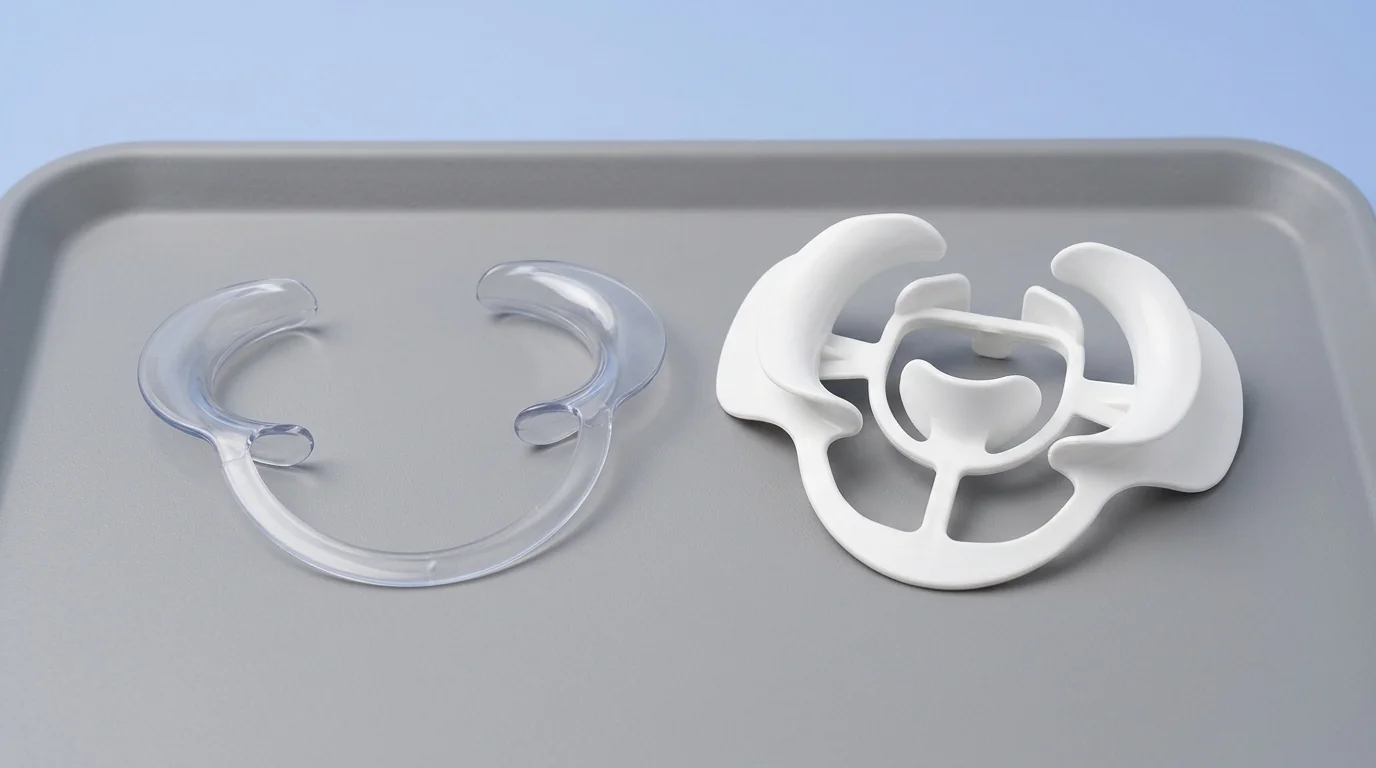 The design of a retractor directly dictates its application. The primary goal is always to move the lips and cheeks away from the operative field, but the direction and extent of that retraction vary significantly between designs.
- C-Shape Retractors: This is arguably the most ubiquitous design. It consists of a single piece of C-shaped plastic that engages the commissures of the mouth, pulling the cheeks laterally. Its simplicity makes it ideal for routine procedures like in-office bleaching, digital scanning, and general intraoral photography where broad lateral access is the main requirement.
- O-Shape (or Ring) Retractors: These retractors provide full, 360-degree retraction of both the lips and cheeks. By creating a complete ring, they offer excellent access to the entire dental arch, including the gingival margins. This makes them particularly useful for complex bonding procedures (e.g., placing multiple veneers), full-arch impressions, or pit and fissure sealant application in paediatric patients.
- V-Shape Retractors: This design offers a middle ground, providing strong retraction with a different vector of force compared to the C-shape. Some clinicians find them more comfortable for patients during longer procedures and effective for providing access to anterior teeth.
- Lip and Cheek Retractors with Tongue Guards: For procedures in the posterior mandible, managing the tongue is as critical as managing the cheeks. These more complex retractors incorporate a paddle or cage to actively depress and retract the tongue, providing an exceptionally clear field for implant placement, Class V restorations, or seating crowns on lower molars. The choice between these designs depends entirely on procedural needs, and a well-equipped practice typically stocks a variety of dental cheek retractors to ensure optimal access for any given case.
Material Considerations: Autoclavable vs. Disposable
The operational decision between reusable and single-use retractors comes down to a balance of cost, convenience, and infection control protocol.
Autoclavable Plastic/Polycarbonate This is a workhorse material for many practices. These retractors are designed for multiple uses, making them a cost-effective choice over the long term.
- At a glance: Made from durable, medical-grade plastics that can withstand the heat and pressure of steam sterilisation. Models like the Dentomech Cheek Retractor, made from durable, autoclavable plastic, are a common choice for practices prioritising reusability. They require a rigorous cleaning and sterilisation workflow between patients but eliminate the recurring cost and waste of disposables.
Disposable Plastic For high-volume clinics, community health centres, or procedures with a high risk of contamination, single-use retractors offer a distinct advantage.
- At a glance: Supplied individually packaged and sterile (or sanitised), they are used once and then discarded. This completely removes the risk of cross-contamination and frees up staff time from cleaning and autoclaving. The trade-off is a higher per-procedure consumable cost and an increase in clinical waste.
Metal (Stainless Steel) While less common for the C-shape or O-shape designs, metal retractors like the Minnesota or Austin are mainstays in oral surgery.
- At a glance: Their primary advantages are rigidity and durability. They provide firm, unwavering retraction of thick cheek tissue during surgical procedures and can be sterilised indefinitely without degradation. However, they can be less comfortable for the patient due to their rigidity and thermal conductivity.
A Practical Selection Checklist for Your Practice
When sourcing cheek retractors, move beyond a simple comparison of types. An experienced procurement manager or senior clinician evaluates instruments based on a more nuanced set of criteria.
Procedural Application Is this for a 5-minute digital scan or a 2-hour restorative session? Match the retractor's design and comfort level to the duration and complexity of the intended procedure.
Patient Comfort Run a gloved finger along the edges of the retractor. Are they smooth, rounded, and well-finished? Sharp or rough edges from poor manufacturing can cause significant patient discomfort, ulceration, and a negative patient experience. Flexibility is also important; an overly rigid plastic retractor is less forgiving on the soft tissues.
Size and Fit Retractors are not a one-size-fits-all instrument. A standard adult size will be ineffective and uncomfortable for a paediatric patient. Ensure your inventory includes both adult and paediatric sizes to guarantee a proper fit, which is essential for both effective retraction and patient safety.
Sterilisation Compatibility For reusable models, confirm the manufacturer's specified autoclaving parameters (typically 121°C or 134°C). Ensure these align with your facility's standard B-class autoclave cycles. Using incorrect parameters can cause the plastic to warp, discolour, or become brittle prematurely.
Durability and Material Integrity Evaluate the expected lifespan. How many autoclave cycles can the plastic withstand before showing signs of crazing (micro-fractures) or degradation? This is a critical factor in the total cost of ownership that isn't reflected in the initial procurement data.
Regulatory Conformance Look for instruments made from medical-grade materials. Conformance with standards like ISO 21532 for dental retractors provides an assurance of material safety and basic design quality.
Best Practices for Use, Cleaning, and Sterilisation
Proper handling is essential for maximising the lifespan of reusable retractors and ensuring patient safety.
- Insertion Technique: Before insertion, moisten the retractor with water or ask the patient to moisten their lips. This simple step acts as a lubricant and dramatically reduces friction and discomfort. Guide one side into the commissure first, then gently flex the retractor to position the other side.
- Pre-use Inspection: Before every use, visually inspect autoclavable retractors. Look for any signs of cracks, rough edges, or discoloration. A compromised retractor is a fracture risk and should be discarded immediately.
- Cleaning Protocol: Immediately after use, rinse the retractor under running water to remove gross debris. It should then be scrubbed manually with a soft brush and an appropriate enzymatic cleaning solution or processed in an ultrasonic cleaner to break down bio-burden.
- Sterilisation Protocol: After cleaning and thorough rinsing, dry the retractor completely. Package it in a new sterilisation pouch and process it in an autoclave according to the manufacturer's guidelines. Avoid overloading the autoclave chamber to ensure proper steam penetration for all instruments. Maintaining these standards across all your instruments is a cornerstone of safe practice, from retractors to the most complex handpieces in your Dental operatory.
- Storage: Once sterilised, store the pouched retractors in a designated clean, dry cabinet, protected from contamination until their next use.
Equip Your Practice Today
Ensuring you have the appropriate cheek retractors for every procedure is a simple but critical step in enhancing clinical efficiency, safety, and patient outcomes. Explore the range of options available on MedikaBazaar to equip your practice with the right tools for clear and unobstructed dentistry.
FAQs

