

Dentist
A Clinician's Reference on Gum Paint: Formulations, Applications, and Best Practices
An essential guide for dental professionals on gum paint. Explore its clinical applications, active ingredients, selection criteria, and proper usage for patient care.


As clinicians and procurement heads, we frequently encounter inflammatory gingival and periodontal conditions. In managing these, topical agents play a crucial supportive role. Among these, gum paint remains a mainstay in the dental armamentarium for its targeted, localised action in treating conditions ranging from simple gingivitis to more complex periodontal issues. It is a viscous liquid formulation designed for direct application to the gums to deliver therapeutic agents where they are needed most.
This resource provides a detailed operational and clinical overview of gum paint, focusing on its mechanism, formulations, and the practical criteria for its selection and application in an Indian clinical setting.
Understanding the Mechanism: How Gum Paint Works
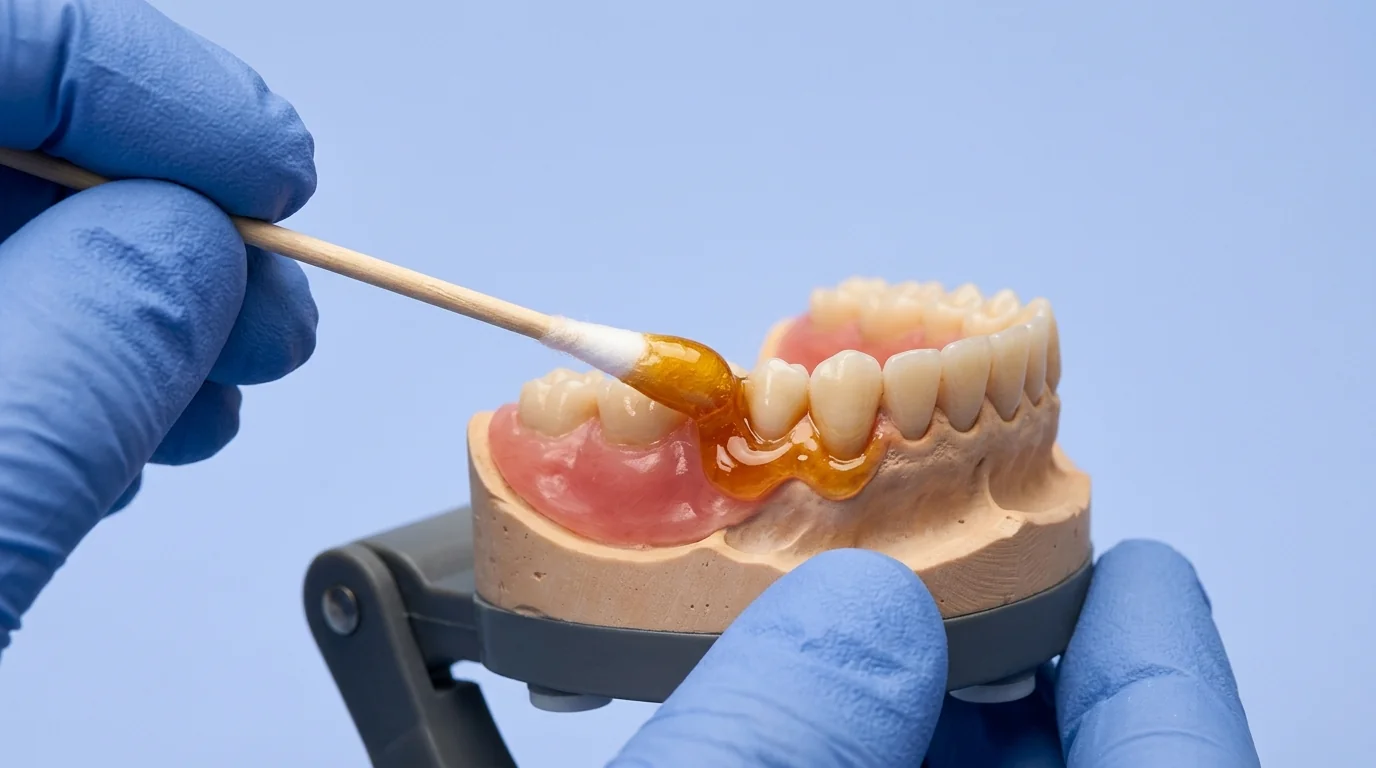 The efficacy of any gum paint formulation stems from a combination of actions delivered by its active ingredients. Understanding these mechanisms is key to selecting the right product for a specific clinical scenario.
- Astringent Action: This is the primary function responsible for treating "spongy" or "boggy" gums. Astringents, most commonly tannic acid, work by precipitating surface proteins on the gingival mucosa. This action constricts the tissue, reduces capillary permeability, and decreases inflammatory exudate and minor bleeding. The result is a firmer, healthier-looking gingiva.
- Antiseptic/Antimicrobial Action: To address the bacterial etiology of gingivitis and periodontitis, formulations include antiseptics. Agents like iodine, thymol, or cetylpyridinium chloride (CPC) exert a broad-spectrum antimicrobial effect, reducing the pathogenic load on the gingival surface and in the sulcus. This helps control infection and prevent its progression.
- Anti-inflammatory and Obtundent Action: Many formulations contain agents like menthol, camphor, or eugenol. These provide a mild counter-irritant effect, which helps in masking deeper pain and provides immediate symptomatic relief to the patient. The cooling sensation of menthol, for instance, is soothing on inflamed gums, improving patient comfort and compliance.
- Demulcent/Vehicle Action: The base, typically glycerine, is not merely inert. Its high viscosity ensures the active ingredients adhere to the moist gingival surface for a clinically significant duration. It also has a soothing, demulcent property that protects the irritated mucosa from further aggravation.
Common Formulations and Key Ingredients
While formulations vary, they are typically built around a core set of active ingredients. A clear understanding of these components is crucial for making an informed procurement decision.
- Tannic Acid: The classic astringent derived from tannins. It is highly effective in contracting and firming up inflamed, edematous gingival tissue.
- Iodine Preparations: Often included as potassium iodide and iodine. This combination provides a powerful, broad-spectrum antiseptic effect against bacteria, fungi, and viruses. Note its potential for staining and the necessity to screen patients for iodine allergies or thyroid conditions.
- Thymol: An essential oil derivative with strong antiseptic and antifungal properties. It is a key component of many classic oral antiseptic formulations.
- Menthol: Provides a counter-irritant and cooling effect, offering immediate symptomatic relief from pain and irritation. It also improves the product's palatability.
- Glycerine: The ideal vehicle due to its viscosity, which promotes adherence to the gums, and its sweet taste and soothing properties.
For instance, a widely used formulation such as the ICPA Pyosan Gum Paint Intraoral Gel effectively combines the astringent power of Tannic Acid with the antiseptic properties of Potassium Iodide and Iodine, complemented by Thymol and Menthol for a soothing effect, all within a stable Glycerine base. This type of multi-action formula is suitable for a broad range of common inflammatory gum conditions.
Clinical Indications and Applications
Gum paint is not a standalone cure but an effective adjunct in the management of several oral conditions seen daily in OPDs.
- Gingivitis: Its primary indication. Regular application reduces gingival inflammation, bleeding on probing, and tissue sponginess.
- Periodontitis: Used as an adjunct to professional scaling and root planing (SRP). While it does not treat deep periodontal pockets, it helps manage supra-gingival inflammation and improves tissue health post-procedure.
- Pericoronitis: Application around the inflamed operculum of a partially erupted third molar can help reduce local inflammation and microbial load.
- Vincent’s Angina (ANUG): Provides symptomatic relief and helps control the superficial spread of necrotizing infection.
- Post-Gingivectomy Care: Can be applied to the surgical site to aid in healing, reduce inflammation, and prevent secondary infection.
- Aphthous Ulcers and Stomatitis: The coating action provides a protective barrier and symptomatic relief from irritation.
Evaluation Criteria for Procurement and Clinical Selection
When selecting a gum paint for your facility, move beyond the list of ingredients and consider these operational and clinical factors.
A Practitioner's Checklist:
- Primary Clinical Need: Is your primary requirement for an astringent (for bleeding, spongy gums) or an antiseptic (for post-surgical or ulcerative conditions)? Match the formulation's strength to your patient demographic.
- Patient Contraindications: Always have protocols to screen for iodine allergies, thyroid disorders, pregnancy, and lactation, especially when considering iodine-based formulations. Having an iodine-free alternative in your inventory is a sound practice.
- Form Factor and Viscosity: A gel formulation in a tube offers better control and less mess than a liquid in a bottle with a dropper. The viscosity should be sufficient to ensure it remains on the gums for at least 30-60 minutes without being immediately washed away by saliva.
- Patient Acceptance: A formulation with an acceptable taste and a soothing agent like menthol will see significantly better patient compliance if prescribed for home use.
- Packaging and Shelf Life: Evaluate the packaging for ease of dispensing in a clinical setting. Check the product's specified shelf life and storage conditions (e.g., store away from direct sunlight) to ensure potency is maintained.
- Regulatory Status: Ensure the product is manufactured by a GMP-certified facility and complies with the regulations set forth by the Drugs and Cosmetics Act, 1940.
Protocol for Application: A Step-by-Step Guide
Proper application technique is critical to achieving the desired clinical outcome.
- Isolate and Dry: The first and most crucial step is to ensure the target gingival area is as dry as possible. Use cotton rolls and a gentle stream from an air-water syringe. A dry surface dramatically improves the adherence and contact time of the medicament.
- Apply Sparingly: Using a sterile cotton pellet, micro-applicator, or a clean, gloved finger, apply a thin layer of the gum paint.
- Massage Gently: Massage the formulation gently into the gingival margin and, most importantly, into the interdental papillae where inflammation is often most severe.
- Provide Post-Application Instructions: Clearly instruct the patient to avoid eating, drinking, or rinsing their mouth for at least 30 to 60 minutes post-application. They should also be advised to avoid vigorous spitting to allow the medication to work.
- Define Frequency and Duration: The typical recommendation is application 2-3 times daily, after meals and oral hygiene procedures, for a period of 7-14 days. This should be adjusted based on clinical assessment.
Integrating Gum Paint into Broader Periodontal Care
It is essential to position gum paint correctly within a total treatment plan. It is a valuable therapeutic adjunct, but it does not replace the foundational procedures of periodontal therapy. Its use must be accompanied by definitive treatments like professional scaling and root planing to remove the primary etiological factors—plaque and calculus. Effective management requires a multi-faceted approach, combining in-clinic procedures with appropriate topical agents and a robust selection of professional Dental supplies. Patient education on proper brushing and flossing techniques is paramount for long-term success.
Equip Your Facility Today
For your practice, clinic, or hospital department, ensuring a reliable supply of effective topical agents like gum paint is fundamental to delivering comprehensive patient care. Explore the range of professionally vetted oral care solutions on MedikaBazaar to meet your specific clinical and operational needs.
FAQs

