
Dentist
A Procurement Checklist for Selecting the Right Implant Dental Handpiece
A detailed guide for procurement managers on selecting an implant dental handpiece. Covers key specifications, supplier evaluation, and common pitfalls.


As the head of procurement or a senior clinician, your equipment decisions directly impact clinical outcomes, operational efficiency, and patient safety. Selecting an implant dental handpiece is not a routine task; it's a critical investment in a specialised surgical instrument. Unlike a general-purpose handpiece, this device operates under demanding conditions of high torque and low speed, essential for precise osteotomies in implantology.
This guide provides a structured framework for evaluating and selecting the right implant handpiece for your facility, moving beyond basic specifications to focus on the operational and clinical realities you face daily.
Initial Needs Assessment: Defining Your Clinical Requirements
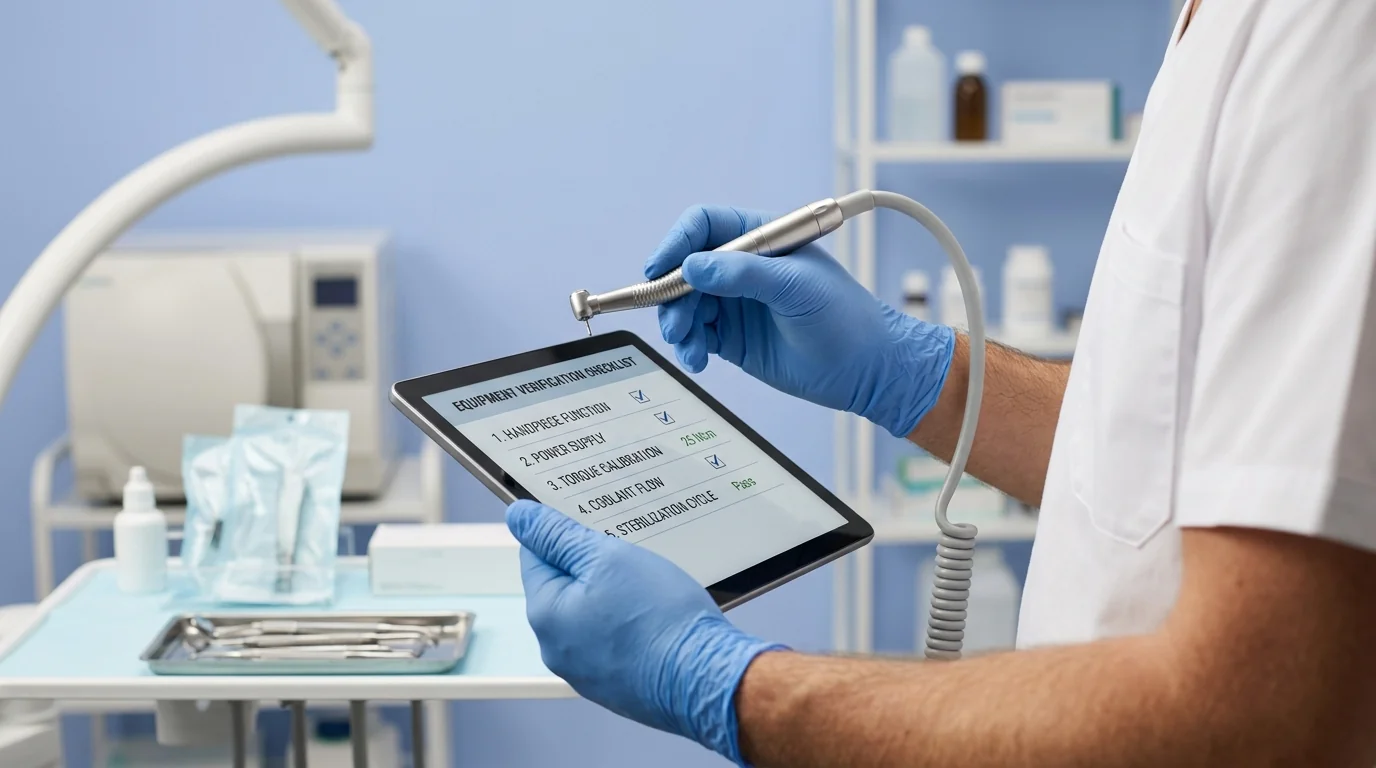 Before evaluating specific models, a thorough internal needs assessment is crucial. This ensures the selected equipment aligns perfectly with your facility’s workload and surgical scope.
Use the following checklist to define your requirements:
- Implant Procedure Volume:
- Low Volume (<10/month): A durable, reliable workhorse may be sufficient.
- Medium Volume (10-30/month): Focus on ergonomics and ease of maintenance to minimise downtime.
- High Volume (>30/month): Prioritise instruments with a proven track record of longevity, excellent service support, and readily available spares.
- Facility Type and Scope:
- Dedicated Implantology Centre: You may require multiple specialised handpieces, including straight and angled designs, for complex cases.
- Multi-Specialty Hospital: Compatibility with existing surgical motors across departments is key. Standardisation can simplify maintenance and training.
- General Dental Practice: A versatile and robust 20:1 handpiece that handles standard implant placements efficiently is the primary need.
- Surgical Procedures Performed:
- Standard Implant Placement: A standard 20:1 contra-angle handpiece is the baseline.
- Complex Bone Augmentation (e.g., Ridge Splitting, Sinus Lifts): Requires a handpiece that delivers consistent, high torque without faltering under load.
- Existing Surgical Motor System:
- This is a non-negotiable compatibility check. Confirm the coupling type of your implant motor (e.g., E-type) to ensure the handpiece will connect and function correctly.
Core Technical Specifications: An Evaluation Checklist
Once your needs are defined, you can assess the technical merits of different handpieces. Look past the marketing materials and focus on these critical performance indicators.
| Specification | What to Evaluate | Clinical Significance |
| Gear Ratio | Must be a reduction ratio, typically 20:1. | This is the defining feature. It multiplies the motor's torque and reduces its speed, providing the slow, powerful rotation necessary for controlled bone cutting and preventing thermal injury. |
| Torque Output | Look for a maximum torque rating, often in the range of 50-80 Ncm. | High, stable torque prevents the bur from stalling in dense cortical bone, ensuring a precise and efficient osteotomy. Inconsistent torque is a clinical risk. |
| Speed Range (RPM) | Must be capable of operating at very low speeds (e.g., 15-2,000 RPM). | Controlled low speeds are essential to prevent overheating of the bone (thermal necrosis), which can lead to implant failure. |
| Chuck Mechanism | Push-button is the modern standard. | A secure push-button chuck ensures the bur is held firmly without wobbling, which is critical for precision. It also allows for quick, aseptic bur changes during surgery. |
| Material & Coating | Typically high-grade stainless steel or titanium. Check for scratch-resistant coatings. | A robust material ensures durability through repeated sterilisation cycles. Titanium offers a lighter weight, reducing operator fatigue, while stainless steel provides excellent strength. |
| Irrigation System | Must feature an external irrigation port. Some offer internal irrigation as well. | External delivery of sterile saline is mandatory to cool the bur and bone. An efficient, clog-free irrigation system is vital for preventing thermal damage. |
| Illumination (Optics) | Evaluate the need for integrated fibre optics (Optic) vs. no illumination (Non-Optic). | Fibre optics provide direct, shadow-free light at the surgical site. However, non-optic models are often more durable, have fewer components to fail, and are less complex to maintain. For many procedures where external lighting is sufficient, a non-optic model like the I-Medica 20:1 Non Optic Handpiece - NOE203 offers a reliable and pragmatic solution. |
Beyond the Spec Sheet: Operational and Ergonomic Criteria
The best dental handpiece on paper may not be the best in practice. Day-to-day usability and long-term maintenance are just as important as torque figures.
- Ergonomics and Balance: A well-balanced handpiece reduces operator fatigue and improves precision during long procedures. Assess the grip, weight distribution, and head size. A smaller head provides better access and visibility in posterior regions.
- Sterilisation and Maintenance: Confirm the handpiece is fully autoclavable at 135°C. Evaluate the ease of disassembly for cleaning and lubrication. The manufacturer’s maintenance protocol should be clear, straightforward, and not require expensive proprietary equipment.
- Regulatory Compliance: Ensure the device has the necessary certifications for medical devices in India. Look for ISO 13485 (quality management systems for medical devices) and CE marking, which indicate adherence to established safety and performance standards.
- Noise and Vibration: Lower operational noise and minimal vibration contribute to a better patient experience and reduce long-term fatigue for the clinician.
Evaluating a Dental Surgical Handpiece Supplier
The equipment is only as good as the support behind it. When you are sourcing from a dental surgical handpiece supplier, their reliability is a critical part of the procurement decision.
Supplier Vetting Checklist:
- After-Sales Service and Support: What is the warranty period? Do they provide access to authorised service centres within India? What is the typical turnaround time for repairs? Downtime is a significant operational cost.
- Availability of Spare Parts: Can you easily source common replacement parts like bearings, chuck components, and O-rings? A handpiece without available spares is a disposable item.
- Technical Expertise: Does the supplier’s team have genuine product knowledge? Can they answer specific clinical and technical questions about the handpiece's application and maintenance?
- Logistics and Reliability: Does the supplier maintain adequate stock? Are their delivery timelines dependable? This is crucial for both initial procurement and urgent replacements.
Common Procurement Pitfalls to Avoid
- Prioritising Upfront Cost: The cheapest handpiece often carries the highest long-term cost through frequent breakdowns, poor performance, and expensive repairs. Focus on total cost of ownership.
- Ignoring Compatibility: A simple oversight in matching the handpiece coupling to your existing surgical motor can render the entire investment useless. Always double-check compatibility.
- Underestimating Maintenance Requirements: Failing to implement a strict, post-procedure cleaning and lubrication protocol is the primary cause of premature handpiece failure. Factor these operational steps into your workflow from day one.
- Neglecting Ergonomics: Choosing a heavy or poorly balanced handpiece can lead to operator fatigue and compromise clinical precision, especially during complex or lengthy surgeries.
Equip Your Facility Today
Selecting the right implant surgical handpiece is a foundational decision for any practice performing implantology. By using a structured evaluation process that considers clinical needs, technical performance, and supplier reliability, you ensure your team is equipped with tools that enhance precision, ensure patient safety, and provide a reliable return on investment.
For facilities looking to equip their surgical suites, MedikaBazaar offers a curated selection of dental equipment from trusted brands, ensuring compliance and quality for your clinical needs.
FAQs


