

Labs
A Procurement Guide to Wholesale Rapid Diagnostic Tests for Indian Labs
A B2B procurement guide for buying wholesale rapid diagnostic tests in India. Evaluate specs, compare suppliers, and avoid common pitfalls for your lab or clinic.


As the procurement lead, you’re not just buying a box of cards; you're buying diagnostic certainty. When sourcing wholesale rapid diagnostic tests, the pressure is on to balance cost, clinical accuracy, and operational efficiency. A bad batch or an unreliable test doesn't just waste budget—it compromises patient care, increases downstream testing costs, and damages clinical reputation. This guide is a no-nonsense, peer-to-peer checklist for making the right procurement decision for your hospital, lab, or clinic.
Needs Assessment: Your Pre-Procurement Checklist
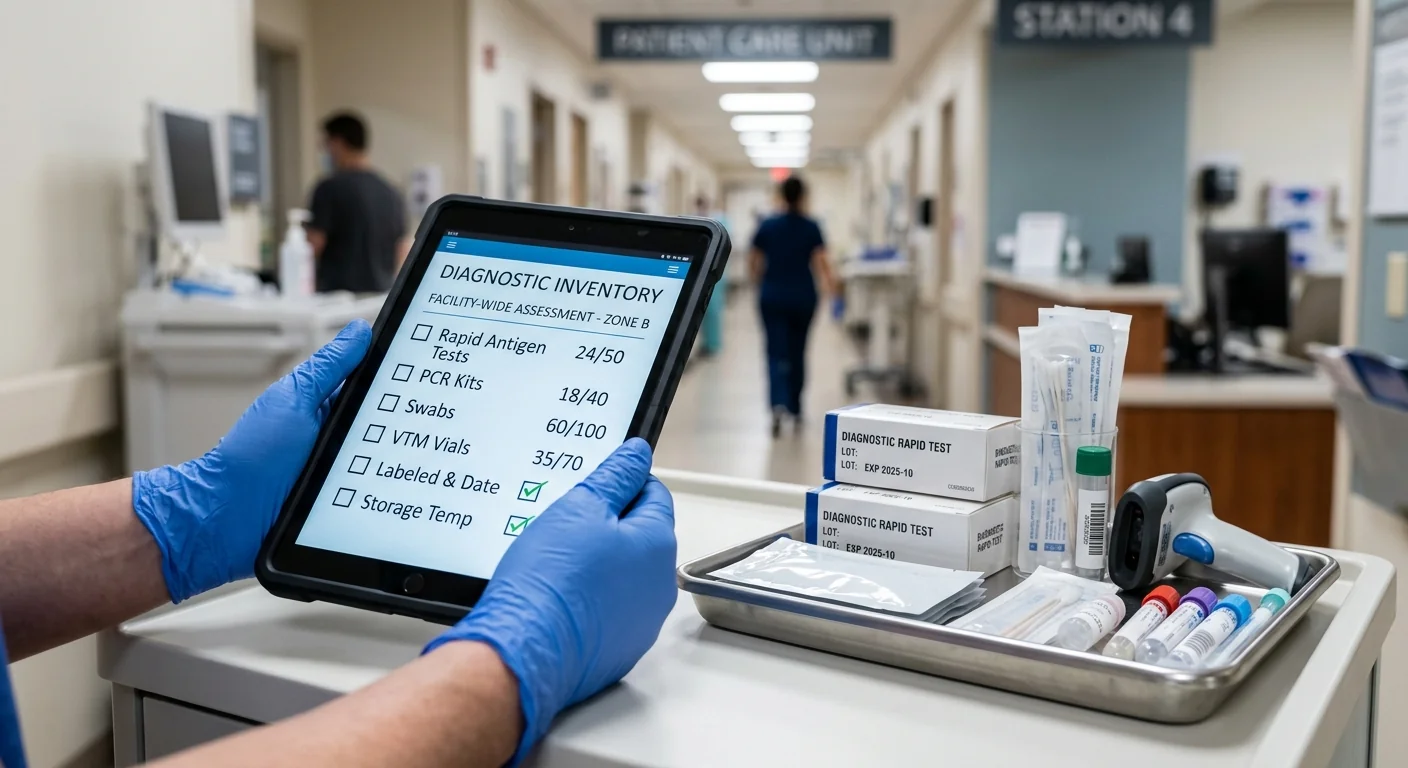 Before you even look at a product catalogue, a thorough internal needs assessment is critical. The requirements of a 20-bed nursing home are vastly different from a 500-bed tertiary care centre.
- Project Your Volume: How many tests do you realistically perform daily or weekly? Don't just average it out. Account for seasonal spikes. A lab in Delhi needs to plan its dengue test kit inventory differently in September than in March. Factor in volumes from OPD, casualty, and inpatient wards separately.
- Define the Use Case: Is this for initial screening in the emergency room where speed is paramount? Or is it for batch testing in the central lab where workflow integration matters more? A rapid test kit for a rural health camp must be simple to use with minimal training, while a lab-based test can have more complex steps.
- Assess Your Facility's Capabilities: What are your storage realities? Do you have consistent cold chain (2-8°C) capacity for a large order, or do you require kits that are stable at ambient room temperature? Check your existing Standard Operating Procedures (SOPs). Does the test require serum/plasma when your workflow is geared towards whole blood?
- Consider the End-User: Who is performing the test? A senior pathologist, a junior lab technician, or a nursing staff member on the ward? The simpler the test procedure—clear instructions, fewer steps, minimal reagent preparation—the lower the risk of pre-analytical and analytical errors.
Evaluating Key Specifications: Beyond the Brochure
Every manufacturer will claim high accuracy. Your job is to look past the marketing and scrutinize the technical data sheet.
- Sensitivity & Specificity: These are non-negotiable metrics.
- Sensitivity: The test's ability to correctly identify patients with the disease (true positive rate). Low sensitivity means false negatives, a significant clinical risk.
- Specificity: The test's ability to correctly identify patients without the disease (true negative rate). Low specificity means false positives, leading to unnecessary anxiety and costly follow-up investigations. Always ask for batch-specific Quality Control (QC) data if available.
- Regulatory Approvals: In India, this is straightforward. The kit must have Central Drugs Standard Control Organisation (CDSCO) approval. Do not procure any IVD kit without it. ISO 13485 certification for the manufacturer indicates a robust quality management system, which is a strong positive signal.
- Shelf Life & Stability: Check the shelf life from the date of manufacture. When you place a bulk order, specify a minimum acceptable shelf life on delivery (e.g., at least 75% of total shelf life remaining). Also, verify the stability of the kit once the pouch is opened.
- Time-to-Result: In a high-volume setting like a fever clinic or casualty, the difference between a 10-minute and a 20-minute result is operationally significant. It impacts patient flow, clinician decision-making, and overall departmental efficiency.
Comparison Criteria: Moving Beyond Unit Price
The lowest dengue card test price is rarely the best value. A procurement decision must be based on the Total Cost of Ownership (TCO).
| Evaluation Criteria | What to Look For | Why It Matters Operationally |
| Unit Price | The cost per test. | The most visible cost, but only part of the TCO. |
| Cost of Controls | Are quality controls included or sold separately? | Adds to the recurring cost per test run. |
| Repeat Test Rate | A high rate of invalid or equivocal results. | Directly increases cost per reportable result and delays diagnosis. |
| Staff Training Time | A complex procedure requires more training. | Hidden operational cost affecting staff productivity. |
| Supplier Reliability | On-time delivery, consistent stock availability. | Stock-outs during peak season are operationally disastrous. |
Focusing solely on the initial quote is a classic pitfall. A cheap, low-specificity dengue test kit that generates 10% false positives will cost your institution far more in confirmatory ELISA tests and clinical time than a slightly more expensive, high-quality kit. When evaluating athenese rapid test cards for labs, for instance, consider their long-standing market presence and clinical acceptance as part of the value equation.
Case Study: Procuring for Dengue Season
Let’s apply this framework to a common requirement: stocking up on dengue rapid tests ahead of the monsoon. The goal is to detect the NS1 antigen early.
You need a test that is fast, reliable, and available in manageable pack sizes. For smaller clinics, a dengue diagnostic test kit pack of 10 is often ideal to manage inventory and expiry. Larger hospitals will need to place bulk orders based on previous years' consumption data.
A solid, clinically-validated option is the Athenese Dengue Ag Rapid Card - 10 Tests (R0063C). It's a lateral flow immunoassay for the qualitative detection of Dengue NS1 antigen in human serum or plasma. It meets the key criteria: CDSCO approved, good sensitivity and specificity profiles documented, and a standard 15-minute time-to-result. The reputation of Athenese provides confidence in batch-to-batch consistency. When you decide to buy dengue rapid test kit online, a product like this is a reliable benchmark for your evaluation. The athenese dengue ag rapid card price should be evaluated against its clinical reliability and the avoidance of downstream costs.
Common Procurement Pitfalls to Avoid
We’ve all seen these mistakes. They are costly and disruptive.
- The Shelf-Life Trap: Receiving a large shipment with only a few months left before expiry. Always specify minimum shelf life requirements (e.g., 12 months or more) in your purchase order.
- The Cold Chain Gamble: Ordering pallets of 2-8°C kits without verifying you have the refrigerated storage capacity to handle the full volume upon delivery.
- Ignoring Internal Validation: Before switching brands or suppliers for a critical test, procure a small pilot batch. Run it in parallel with your existing method to validate its performance within your facility's specific conditions and patient population.
- Single-Supplier Dependency: Relying on one supplier, especially for high-volume, critical tests, creates a significant risk. A supply chain disruption at their end can bring your diagnostics to a halt. Diversify your key suppliers.
Why Source Your Diagnostic Kits from MedikaBazaar?
Managing dozens of vendors for different diagnostic supplies is an operational drain. Consolidating procurement through a single, reliable B2B platform addresses many of the pitfalls discussed.
- One-Stop Procurement: Access a vast catalogue of wholesale rapid diagnostic tests from multiple verified brands on a single platform. This simplifies vendor management, PO processing, and payment reconciliation.
- Assured Quality and Compliance: All products listed are from authorized distributors and manufacturers. You get genuine products with proper GST invoicing, ensuring a clean audit trail and adherence to regulatory standards.
- Transparent and Competitive Pricing: MedikaBazaar's model is built for B2B procurement. You get access to competitive bulk pricing without the protracted negotiations required with individual dealers.
- Pan-India Logistics: Whether your facility is in a metro city or a Tier-3 town, MedikaBazaar's robust supply chain ensures timely and reliable delivery, preventing critical stock-outs.
Equip Your Facility Today
Making the right choice in diagnostic procurement is fundamental to clinical excellence and operational stability. By moving from a price-first approach to a TCO-based evaluation, you equip your clinicians with reliable tools and protect your institution's bottom line.
Explore MedikaBazaar’s extensive range of CDSCO-approved rapid diagnostic tests and streamline your procurement process for better clinical and financial outcomes.
FAQs

