

Dentist
A Guide to Buying Dental Restorative GIC Online
A B2B procurement guide for buying dental restorative GIC online in India. Checklists for needs-assessment, specs, supplier evaluation, and cost analysis.


As a procurement head, your choice of dental consumables directly impacts clinical outcomes, operational efficiency, and your bottom line. Sourcing dental restorative GIC online requires a systematic approach that goes beyond just the price per box. This guide provides a framework for evaluating and procuring the right Glass Ionomer Cement for your institution's specific needs, ensuring you get consistent, reliable material that your clinical team trusts.
Initial Procurement Checklist: Defining Your GIC Requirements
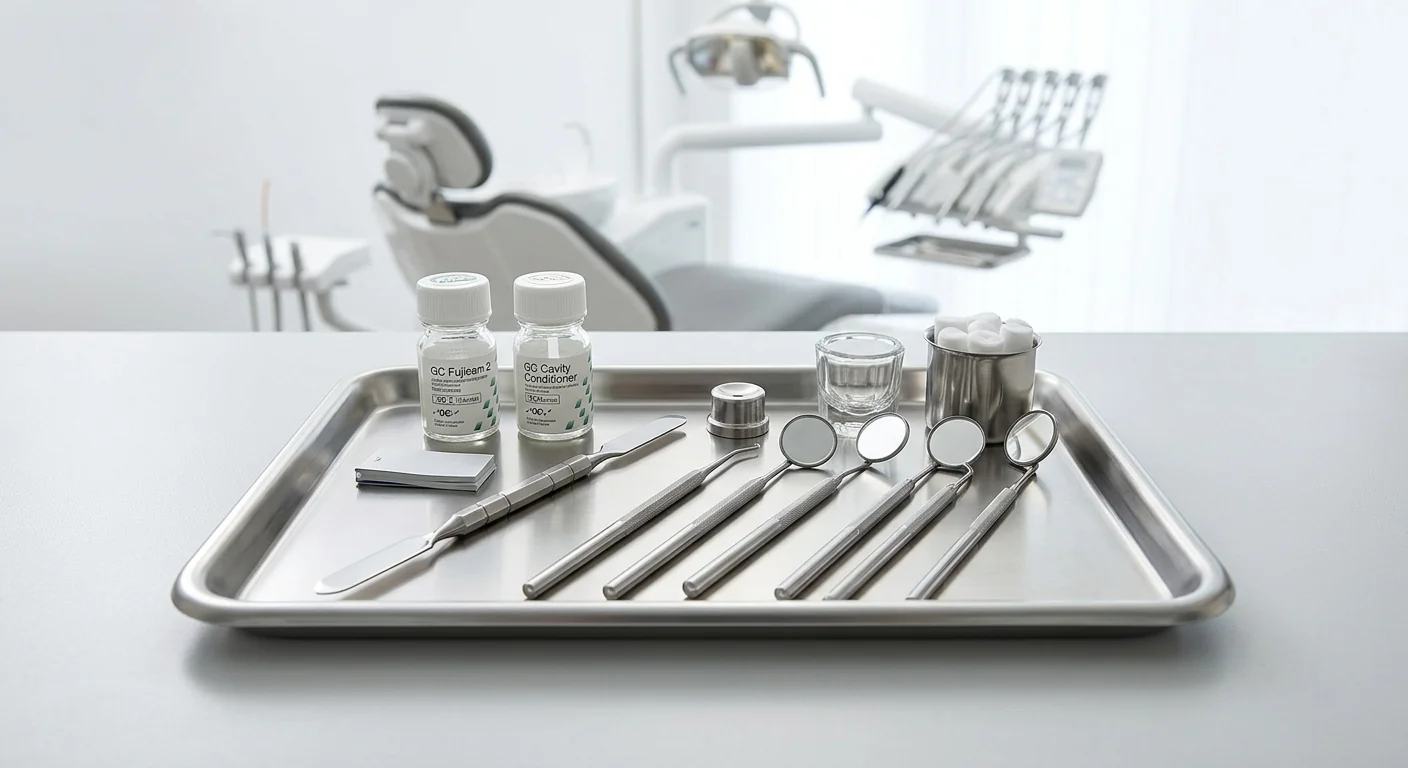 Before you start comparing products or suppliers, a clear needs assessment is critical. The right GIC for a high-volume hospital OPD is different from what a boutique paediatric practice needs. Run through this checklist first.
- Facility Type & Case Mix: Are you a multi-chair hospital, a private clinic, a dental college, or a community health centre? Your primary procedures—be it routine Class III/V restorations, atraumatic restorative treatment (ART), or post-endodontic core build-ups—will dictate the required material properties.
- Monthly Consumption Volume: Calculate your average monthly requirement in terms of number of restorations. This determines whether you need to procure smaller 15gm powder packs or larger economy packs to minimise reorder frequency and unit cost.
- Primary Use Case: Is the primary application for permanent fillings, as a liner/base under composites, or for fissure sealing? This directly influences the choice between different GIC types, such as conventional versus high-viscosity formulations.
- Patient Demographics: A practice focused on paediatrics or geriatrics will prioritise GICs with high, sustained fluoride release.
- Operator Preference & Workflow: Does your clinical team prefer the control of a traditional hand-mix powder/liquid system, or does your high-turnover environment benefit from the consistency and speed of encapsulated GICs?
Evaluating Key Specifications for Glass Ionomer Cement
Once you've defined your needs, the next step is to evaluate the technical specifications of the material itself. These are not just marketing points; they are direct indicators of clinical performance. A failure here means re-treatments, wasted chair time, and increased costs.
- Material Composition: The performance of any glass ionomer cement hinges on its formulation. Look for a fine fluoroaluminosilicate glass powder and a polyacrylic acid liquid. The powder-to-liquid ratio, which is operator-controlled in hand-mix systems, is crucial for achieving optimal strength and consistency.
- Working and Setting Times: For a busy OPD, every second counts. Evaluate the manufacturer’s stated working time (time from start of mixing to when the material must be seated) and net setting time. A longer working time offers more control, while a shorter setting time improves chair-side efficiency.
- Compressive & Flexural Strength: The material must withstand occlusal forces. Check that the product complies with ISO 9917-1 standards for dental cements. For instance, the popular D-Tech Restore Glass Restorative GIC is engineered for high compressive strength, making it suitable for load-bearing restorations in posterior teeth.
- Fluoride Release: This is a primary clinical advantage of GICs, offering cariostatic properties at the restoration margin. Look for data on high initial fluoride release followed by a sustained, long-term release.
- Biocompatibility and Adhesion: A key benefit of GIC is its intrinsic chemical adhesion to both enamel and dentin, minimising the need for aggressive tooth preparation. Ensure the material is biocompatible and non-irritating to the pulp.
- Radiopacity: The material must be sufficiently radiopaque to be clearly visible on post-operative radiographs, allowing clinicians to distinguish it from secondary caries or voids.
Decoding GIC Types: Matching the Product to the Procedure
Not all GICs are created equal. Using the wrong type for a procedure is a common cause of clinical failure. Understanding the classification helps in making an informed procurement decision about the different gic types available.
| GIC Type | Primary Clinical Application | Key Characteristic |
| Type I | Luting cement for crowns, bridges, inlay/onlays, and orthodontic bands. | Fine particle size, low film thickness. |
| Type II | Restorative cement for aesthetic and load-bearing fillings. | Higher strength and wear resistance. Ideal for a standard gic filling. |
| Type III | Liners and bases under composite, amalgam, or ceramic restorations. | Good thermal insulation, fast-setting. |
| Type IX | High-viscosity "packable" GIC for posterior restorations and ART. | High wear resistance, high fluoride release, can be placed in bulk. |
Most multi-purpose clinics require a reliable stock of Type II and Type IX restoratives. For specialised needs, you can explore our full range of Restorative Glass Ionomer Cements to find materials suited for luting or use as liners.
Beyond the Unit Price: A Holistic Cost Analysis
The sticker price of a GIC kit is only one part of the equation. A thorough procurement manager assesses the total cost of ownership.
- Cost-Per-Application: Analyse the powder/liquid volume provided. A seemingly cheaper kit might offer fewer applications, driving the per-restoration cost up. The final gic filling cost includes material, chair time, and the potential cost of failure.
- Shelf Life and Storage: GICs are sensitive to temperature and humidity. A product with a 2-3 year shelf life from the date of manufacture provides better inventory flexibility than one with less than a year. Factoring in storage requirements is crucial to prevent material degradation.
- Brand Reputation: Established brands like d tech have a track record of clinical performance and consistency. Opting for an unknown, cheaper alternative can introduce clinical variables and risks that far outweigh the initial savings. Reviewing the d-tech glass restorative gic price against its proven reliability often reveals a superior value proposition.
Supplier Evaluation Checklist: Vetting Your B2B Partner
Your choice of a restorative gic supplier is as important as the product itself. A weak link in the supply chain can disrupt your entire clinical operation.
- Regulatory Compliance: Does the supplier provide proper GST invoices for every order? This is non-negotiable for claiming input tax credits and maintaining clean audit trails.
- Product Authenticity Guarantee: Can the supplier guarantee that you will receive genuine, factory-sealed products? Grey market products can be expired, improperly stored, or counterfeit. When you need to buy d-tech dental gic, ensure it comes from an authorised source.
- Pan-India Logistics Network: Can they deliver reliably to your location, whether you're in a metro city or a Tier-3 town? Check for clear shipping timelines and tracking capabilities.
- Order Scalability: The platform should efficiently handle a bulk order for a 100-chair dental college and a small top-up order for a single-doctor clinic.
- Dedicated B2B Support: Is there a responsive customer service team or account manager who understands the needs of institutional buyers? When you search for d-tech cement online, the service behind the sale matters.
Common Procurement Pitfalls to Avoid
We’ve seen these mistakes made. Avoiding them will save you time, money, and clinical headaches.
- Price-Only Focus: Procuring the cheapest available d-tech glass ionomer cement for sale without considering batch freshness, supplier reliability, or shipping time is a false economy. Stock-outs cost more than the per-unit savings.
- Ignoring Pack Size vs. Consumption: A high-volume hospital benefits from large economy packs. A small clinic buying the same pack risks material expiring before it can be used. Match your SKU to your actual consumption rate.
- Improper Inventory Management: Failing to follow a First-Expiry, First-Out (FEFO) system for your GIC stock leads to unnecessary wastage. Ensure your storage area is cool, dry, and away from direct sunlight.
- Skipping Team Feedback: Before you buy d-tech restore gic in bulk for the first time, procure a smaller quantity. Let your clinical team use it and provide feedback on its handling, consistency, and setting characteristics.
Why Source Your GIC from MedikaBazaar?
MedikaBazaar is built for the specific needs of institutional healthcare procurement. We address the common pitfalls by providing a streamlined, reliable, and transparent platform.
- Guaranteed Authenticity: We partner directly with manufacturers and authorised distributors. Every product, from a simple GIC kit to advanced equipment, is 100% genuine.
- Competitive B2B Pricing: Our platform offers transparent, competitive pricing with benefits for bulk purchases, helping you manage your budget effectively.
- Pan-India Supply Chain: With a robust logistics network covering over 20,000 pincodes, we ensure timely delivery of your critical dental supplies, minimising the risk of stock-outs.
- Simplified Procurement: Easily search, compare, and order from thousands of medical products. Track your orders, access your invoices, and manage your inventory all from a single B2B-focused portal.
Equip Your Facility Today
Making the right procurement choice for dental restoratives ensures your clinicians can deliver excellent patient care without interruption. By following a structured evaluation process, you can secure high-quality materials that meet your clinical standards and operational budget.
Browse our extensive catalogue of dental restoratives and equip your practice with trusted brands like D-Tech through MedikaBazaar's reliable supply chain.
FAQs

