
The Healthcare Professional’s Guide to BD Venflon™ Pro Safety IV Cannulas


In medical care, Intravenous (IV) cannulas play a crucial role in ensuring effective and efficient delivery of fluids and medications to patients. The BD Venflon™ Pro Safety Needle Protected IV Cannula is a ported, passive safety peripheral IV catheter (PIVC) designed to help minimize the risk of unanticipated blood spatter and needlestick injuries (NSIs).
It features BD Vialon™ material that softens in the vein to improve patient comfort, alongside optional Instaflash™ needle technology for improved vessel entry confirmation; increasing opportunities for first attempt insertion success. The BD Venflon™ Pro Safety IV Cannula represents a pinnacle in peripheral IV catheter (PIVC) design, engineered to elevate safety and efficacy in clinical settings.
Understanding the BD Venflon™ sizes and colour coding:
The BD Venflon™ Pro Safety IV cannulas use a universal color-coding system where each color corresponds to a specific needle gauge (G), allowing for quick identification in clinical settings. A smaller gauge number indicates a larger needle diameter and higher flow rate through the needle length (mm) leading to higher flow rates (mL/min)
- Orange – 14G, 45mm, ~240 mL/min (High flow, major trauma, surgery)
- Grey – 16G, 45mm, ~180 - 220 mL/min (Rapid fluid/blood transfusion)
- Green – 18G, 32mm or 45mm, ~90 - 105 mL/min (Blood transfusion, routine surgery)
- Pink – 20G, 32mm, ~60 mL/min (General IV fluids, antibiotics)
- Blue – 22G, 25mm, ~33 - 36 mL/min (Pediatric/elderly patients)
- Yellow – 24G, 19mm, ~18 - 20 mL/min (Neonates, fragile veins)
What are the features and benefits of using a BD Venflon™ Pro Safety IV Cannulas:
The BD Venflon™ Pro Safety IV Cannula embodies a commitment to innovation, safety, and patient-centered care, setting a new standard of excellence in peripheral IV catheter technology.
Safe to use -
Equipped with a passive safety system, the BD Venflon™ Pro Safety IV Cannula serves as a shield against needlestick injuries, ensuring healthcare practitioners operate with confidence and security.
Improved success rate -
BD Instaflash™ Needle Technology incorporates a notched needle, which is designed to improve insertion success and reduce painful hit-and-miss insertions.
BD Vialon™ Catheter Material:
Utilizing BD Vialon™ Catheter Material (polyurethane), this cannula softens within the vein by up to 70%, extending dwell times and minimizing re-starts.
User- Friendly Design:
The BD Venflon™ Pro Safety IV Cannula accommodates diverse insertion techniques, ensuring adaptability and ease of use for healthcare professionals across various clinical scenarios.
Back-Cut Needle Design:
The back-cut needle design of this cannula optimizes both skin and vein penetration, promoting smooth and precise insertion while minimizing patient discomfort.
Flexible Wings and Ported Design:
Flexible wings provide secure and comfortable patient fixation, while the ported design, featuring a 'snap' cap and removable white vent cap, offers versatility and ease of use, addressing a myriad of clinical needs.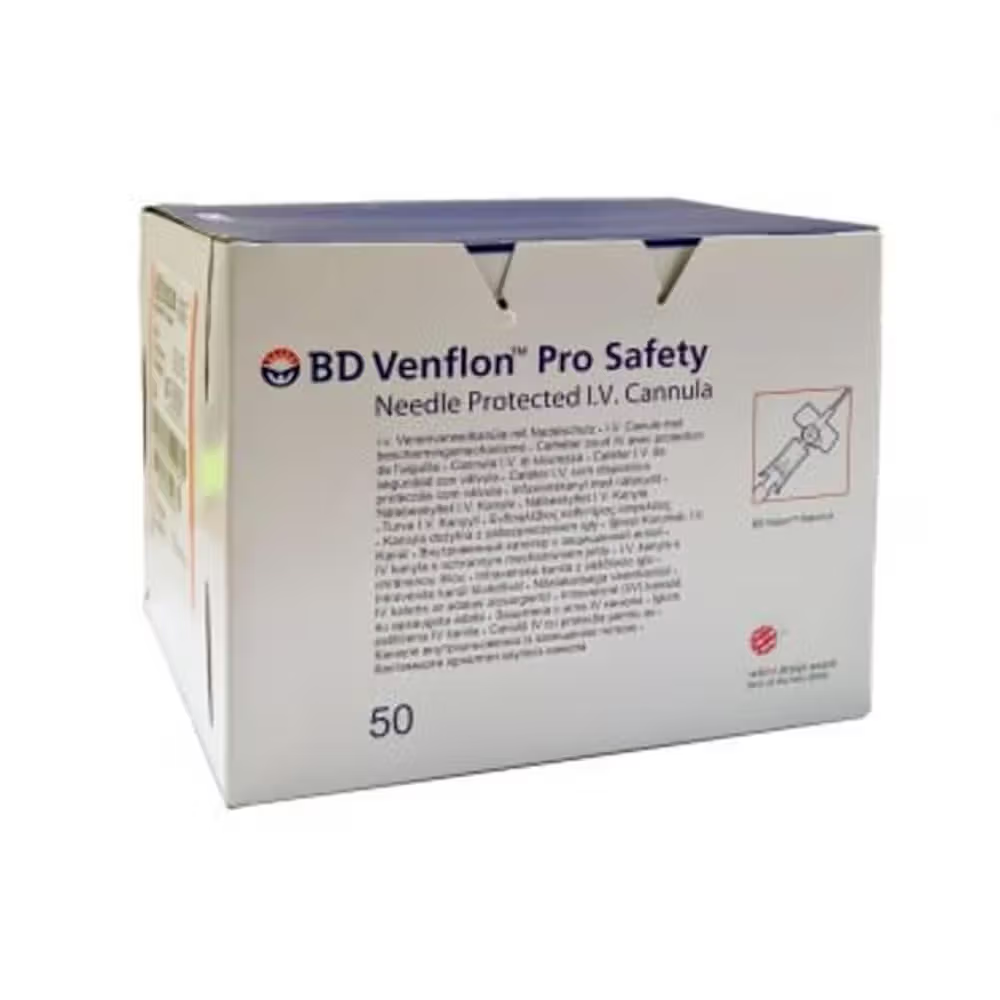
Usage, Removal & Maintenance of BD Venflon™ Pro Safety IV Cannulas:
- Usage –
- Step 1: Prepare a clean tray with the BD Venflon™ Pro Safety cannula, non-sterile gloves, tourniquet, 2% chlorhexidine swabs, saline flush (10ml syringe), and a sterile transparent dressing
- Step 2: Place the patient's arm on a comfortable surface. Select a suitable vein, preferably in the non-dominant hand or forearm, avoiding joints or scarred areas
- Step 3: Apply the tourniquet 4–5 finger-widths above the site. Ask the patient to clench their fist to distend the vein
- Step 4: Use a chlorhexidine swab to clear the area in a cross-hatch or circular motion for 30 seconds and let it air dry completely
- Step 5: Fold down the cannula wings and remove the needle cover. Stabilize the vein by applying traction below the site. Insert the needle at a 10–30 degree angle with the bevel facing up
- Step 6: Watch for the "Primary Flashback" in the flash chamber, confirming the needle tip has entered the vein
- Step 7: Lower the angle almost parallel to the skin and advance the device another 1–2 mm to ensure the catheter tip (which sits slightly behind the needle tip) also enters the vein
- Step 8: Ease the needle back 2–3 mm. A "Secondary Flashback" between the needle and catheter confirms correct placement. While holding the needle steady, slide the catheter fully into the vein
- Step 9: Release the tourniquet. Occlude the vein above the cannula tip. Stabilize the wings and withdraw the needle. The passive safety mechanism will automatically activate and shield the needle tip.
- Step 10: Secure with a transparent dressing and flush with saline to verify patency
- Removal –
- Step 1: Prepare sterile gauze, medical tape (or a plaster), and clean gloves
- Step 2: Ensure any IV fluids are stopped and the slide clamp on the extension tubing is closed
- Step 3: Hold the cannula's wings or hub with one hand to prevent it from moving. Gently peel back the transparent dressing and any securing tapes toward the insertion site
- Step 4: Place a dry, sterile gauze pad over the insertion site without applying heavy pressure
- Step 5: Withdraw the cannula in one steady, fluid motion parallel to the skin. On the BD Venflon™ Pro Safety, the passive safety mechanism is designed to shield the needle during insertion
- Step 6: Immediately apply firm pressure with the gauze for 2–3 minutes (or longer if the patient is on anticoagulants) until bleeding stops
- Step 7: Check the removed catheter to ensure it is intact and that no part has broken off in the vein. Once hemostasis is achieved, secure the gauze with tape or apply a clean plaster
- Step 8: Dispose of the used cannula in a sharps container or clinical waste bags. Document the removal date, time, and site condition in the patient's medical records
- Maintenance –
- Aseptic Handling: Always use Aseptic Non-Touch Technique (ANTT) when accessing the injection port or changing any connections to prevent healthcare-associated infections
- Port Management: The integrated "snap cap" on the injection port must be securely closed when not in use to prevent accidental opening and contamination
- Safety Tip: When withdrawing the needle, a "click" sound often indicates that the safety shield has successfully activated
- Flushing Protocol: Regular flushing with normal saline is essential to maintain patency and prevent occlusions
- Dwell Time: It is generally recommended to replace the cannula every 72 to 96 hours if still in use, or sooner if it is not functioning correctly
Related Products
4
Fastest by 22nd Apr
COD
White Plus I.V. Cannula With Small Wings and Without Port
₹819
₹26,50097% OFF
₹779 with CANNULA5
Fastest by 22nd Apr
COD
White Plus I.V. Cannula With Wings and With Port
₹623
₹21,00097% OFF
₹592 with CND5OFF
Fastest by 21st Apr
COD
BD Insyte-W IV Cannula
₹2,533
₹13,52581% OFF
Fastest by 19th Apr
COD
Romsons Vanesafe IV Cannula
₹1,212
₹18,05093% OFF
Fastest by 26th Apr
COD
BD VENFLON I Type-Peripheral IV Cannula
₹2,558


FAQs
SOCIAL MEDIA
DOWNLOAD APP
HELP US IMPROVE
SOCIAL MEDIA
DOWNLOAD APP