
The Ultimate B2B Guide to Dental Chairs: Parts, Sizes, and Clinic Setup


In 2026, the need for a dental clinic chair is driven by technological integration, ergonomic health, and patient-centric design. Modern practices are moving away from seeing the chair as simple furniture and instead viewing it as a ‘performance platform’ that can improve procedure times by up to 14%
The Anatomy of a Modern Dental Clinic Chair
A modern dental clinic chair is a sophisticated medical device that integrates mechanical, hydraulic, and electronic systems. It is designed to maximize patient comfort while providing practitioners with optimal ergonomic access to the oral cavity.
Core Physical Components
The visible "chair" part of the unit is built for stability and versatility:
- The Base: Constructed from durable materials like stainless steel, the base houses the hydraulic or electromechanical motors that power movements
- Seat and Backrest: These are heavily padded and often use seamless upholstery to prevent bacteria from accumulating in cracks
- Articulating Headrest: This is a critical component that supports the patient’s head and neck and can be adjusted to various angles to give the dentist a clear line of sight
- Adjustable Armrests: Many modern chairs feature retractable or movable armrests, which help patients enter and exit the chair safely
The Dental Unit Infrastructure
The "anatomy" extends beyond the seat to include integrated life-support systems for the procedure:
- Delivery System: This houses the essential tools, such as high-speed turbines, micromotors, and air/water syringes. Systems can be "over-the-patient" (European style) or "hanging" (American style)
- Suction Unit (Evacuation System): Typically located on the assistant’s side, this uses powerful vacuum pressure to remove saliva, blood, and debris
- Cuspidor and Spittoon: A basin where patients can rinse their mouths, often made of ceramic for easy cleaning
- Dental Light: An adjustable LED lamp that provides concentrated, high-intensity illumination without creating shadows
Space Planning: Understanding Standard Dental Chair Size
When planning a dental operatory, space planning must account for both the static footprint of the chair and the ‘dynamic’ space required for the dental team to move freely. While a standard dental chair typically requires a static footprint of 1.8 to 2.0 metres in length and 0.6 to 0.8 metres in width, the functional room size must be significantly larger to accommodate movement.
A general rule for clinic layout is to allocate approximately 32.5 to 37 square metres (350–400 sq. ft) per operatory. This calculation ensures there is enough room for the treatment area as well as necessary auxiliary spaces like a sterilization room, waiting lounge, and reception. For guidance on optimizing these layouts, firms like prarthit shah architects offer specific guides on operatory and consultation room design.
How to Choose the Best Dental Chair for Your Practice
To choose the best dental chair, prioritize durability, patient comfort, and ergonomic design while ensuring it fits your budget and after-sales support. Look for seamless, antimicrobial upholstery for hygiene, synchronized movement, and a robust weight capacity (ideally 180–200 kg). Verify that the chair integrates smoothly with your existing equipment and features easy-to-clean surfaces.
1) Prioritize Ergonomics for You and Your Patient
Ergonomics is often the most critical factor because it affects your posture and long-term health.
- For the Dentist: Look for chairs with a slim backrest to allow better access to the oral cavity in the 9 to 12 o'clock positions
- For the Patient: Features such as memory foam padding and lumbar support reduce anxiety and fidgeting during long procedures
2) Evaluate Functionality and Technology
Match the chair’s features to your specific clinical workflow:
- Control Systems: Modern chairs offer programmable positions and foot controls for hands-free operation to maintain a sterile field
- Technology Integration: Ensure the chair can seamlessly connect with your existing equipment, such as intraoral cameras and digital imaging systems
- Delivery Style: Choose between overhead or underhanging units based on your preferred movement style
3) Consider Durability and Maintenance
A chair must withstand constant daily use and strict cleaning protocols:
- Upholstery: Opt for seamless upholstery as it is easier to disinfect and prevents bacterial buildup
- Rust Prevention: Look for non-corrosive frames, which is known for being rust-proof
- After-Sales Support: Always choose brands with a strong local service network. Downtime from a malfunctioning chair can lead to significant financial loss
- Infection Control: Surfaces should be easy to disinfect. Consider the cleanliness of internal waterlines to maintain safety standards
Spotlight on Reliability: The Confident Chamundi Dental Chair
The Confident Chamundi Dental Chair is a high-performance, electrically operated unit designed for Indian dental clinics, emphasizing long-term reliability, ergonomic workflow, and patient comfort. It typically features a microprocessor-based control system, synchronized backrest movement, and solenoid-operated valves for durability. Variants include the Chamundi Plus and Chamundi Touch, which add features like touchscreen interfaces and brushless optic micro motors.
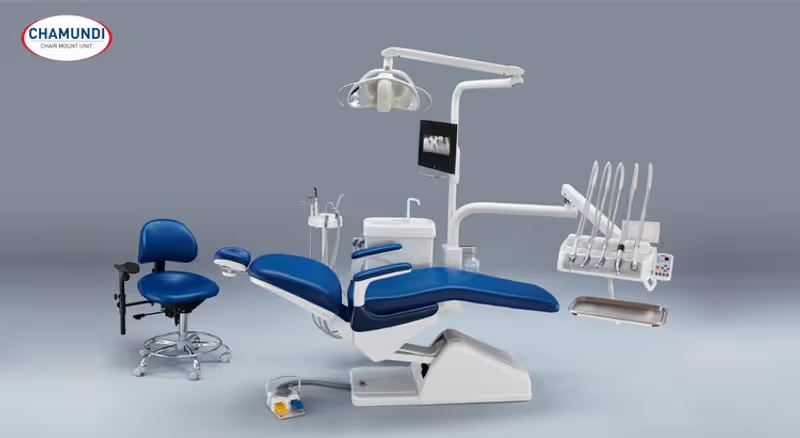
Key Reliability & Performance Features
- Construction: Built with a rigid metal frame and thick cushioned Rexine upholstery for durability
- Control Systems: Microprocessor-controlled PCB with soft-touch keys or 7-inch touchscreens (on the Touch model)
- Long-Lasting Components: Uses 24 VDC solenoid valves for air/water control, designed for long-lasting service
- Suction & Illumination: High-intensity LED operating lights (often FARO) and motorized suction systems (up to 375 L/min)
Maintenance & Longevity
With regular service and maintenance, these units are designed to withstand heavy use in busy clinics. Many models include easy-to-clean, autoclavable components like the spittoon bowl and handpiece handles.
Wholesale Procurement: Equipping Your Dental Facility
Equipping a dental facility through wholesale procurement is a strategic way to manage initial setup costs while ensuring high-quality standards. For a complete clinic setup in 2026, costs typically range from ₹10–12 lakhs for a basic single-chair clinic and can exceed ₹30 lakhs for advanced multi-chair facilities.
Strategic Procurement Framework
To avoid overspending and ensure operational stability, move beyond legacy relationships and adopt a structured approach:
- Standardize Inventory: Use barcode scanning or digital inventory management to track consumables (gloves, masks, bonding agents) and set reorder points
- Request Competitive Quotes: Do not rely on a single supplier; compare web prices against direct quotes from multiple vendors to secure professional pricing
- Explore Private Labels: Private label restorative materials and tips can offer significant savings (e.g., ~₹25 vs. ~₹60 for branded equivalents) without compromising quality
- Lifecycle Costing: When purchasing equipment like high-torque handpieces, evaluate the total lifecycle cost rather than just the initial unit price
Related Products
Fastest by 7th Jun
COD
Gnatus S-500 H Overhanging Dental Chair
₹5,98,900
₹5,97,900 with MBFIRST
Fastest by 8th Jun
COD
Chesa Vayu Regular Underhanging Dental Chair
₹1,54,911
₹1,68,6778% OFF
₹1,53,911 with MBFIRST
Fastest by 8th Jun
COD
Confident Chamundi Dental Chair
₹3,42,000
₹4,48,07524% OFF
₹3,41,000 with MBFIRST
Fastest by 19th Jun
COD
Unicorn Denmart Star Underhanging Dental Chair
₹1,70,240
₹2,04,28817% OFF
₹1,69,240 with MBFIRST
Fastest by 7th Jun
COD
Gnatus S-400 H Overhanging Dental Chair
₹2,50,000
₹3,47,07028% OFF


FAQs
SOCIAL MEDIA
DOWNLOAD APP
HELP US IMPROVE
SOCIAL MEDIA
DOWNLOAD APP