
Centrifuge Machine Guide: Uses & Operation


Choosing Right Centrifuge Type
A laboratory centrifuge is an essential piece of equipment in laboratories where separation of fluids, gases, or liquids based on density is required. It is widely used for processing blood, DNA, RNA, and other cellular components across clinical, research, and diagnostic settings. Selecting the right centrifuge depends on the nature of the application, workload, and long-term laboratory requirements.
Type of samples plays a crucial role in centrifuge machine selection. Different biological materials demand different speeds, rotor configurations, and temperature control. Molecular biology applications often require high-speed centrifuges, while routine clinical procedures such as blood separation can be efficiently performed using low-speed models.
Volume and throughput are equally important considerations. Laboratories handling a large number of samples or bulk volumes need centrifuges with higher capacity, whereas smaller labs may prefer compact models optimized for moderate workloads. Matching centrifuge capacity to daily sample load improves efficiency and turnaround time.
Rotor type directly affects performance and application suitability. Fixed-angle rotors are commonly used for faster separations at higher speeds, while swing-out rotors are ideal for sedimentation and gradient separation. Specialized rotors are also available for specific applications such as microplates or cell culture work.
Maximum speed and relative centrifugal force (RCF) determine how effectively samples are separated. High-speed and high-RCF centrifuges are necessary for demanding applications that require precise and rapid separation, while routine tasks can be managed with lower specifications.
Refrigeration is essential for temperature-sensitive samples. Refrigerated centrifuges help maintain sample integrity during extended or high-speed runs, whereas non-refrigerated models are suitable for basic separations where temperature control is not critical.
Finally, ease of use, maintenance, and cost-efficiency should not be overlooked. User-friendly interfaces reduce training time, and easy maintenance ensures long-term performance and lower operational costs. A well-chosen centrifuge balances performance, safety, and budget while meeting the specific needs of the laboratory.
Key Lab Applications Explained
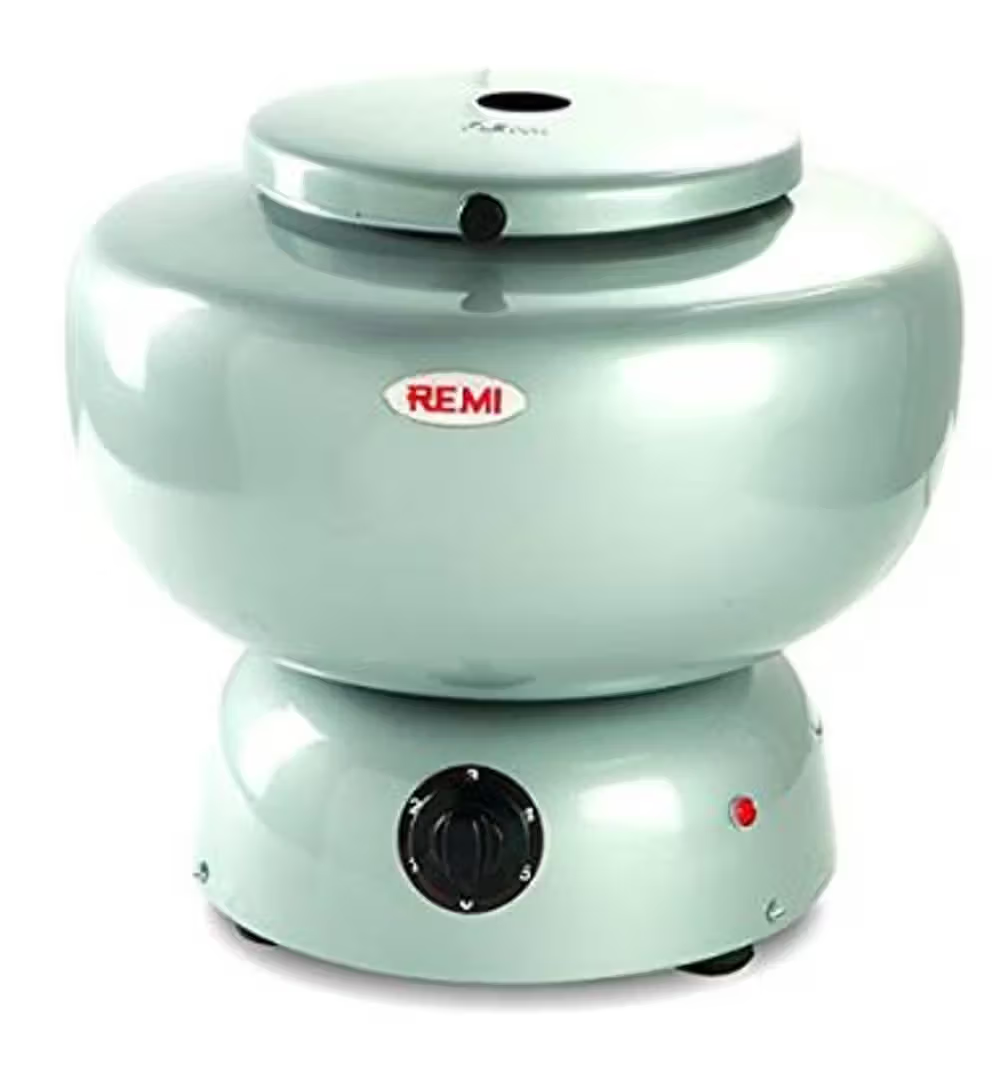
Clinical centrifuges are indispensable in medical and scientific settings due to their wide range of applications. In medical diagnostics, they are used to separate blood components such as plasma, serum, and red blood cells, enabling accurate tests including blood chemistry analysis, hematocrit evaluation, and pathogen detection. In life science research, centrifuges support the isolation and purification of cells, organelles, proteins, viruses, and nucleic acids, helping researchers study biological structures, functions, and interactions. In microbiology laboratories, they assist in concentrating samples and separating compounds, contributing to the quality and consistency of vaccines, antibodies, and pharmaceutical products. In cell biology, centrifuges are essential for harvesting cells from culture media and preparing concentrated cell samples for tissue engineering applications. In molecular biology and forensic analysis, they help process samples such as blood, saliva, and urine for identification and analytical purposes. Additionally, in regenerative therapy, clinical centrifuges are used to process biological materials that support natural healing and rejuvenation, enabling personalized therapeutic and aesthetic applications.
RPM vs. RCF Differences
When working with centrifuges, two key measurements are used to define performance: Revolutions Per Minute (RPM) and Relative Centrifugal Force (RCF). Although often confused, they represent very different aspects of centrifugation, and misunderstanding them can directly affect experimental results. RPM simply indicates how fast the centrifuge rotor is spinning in one minute. While useful, RPM alone does not describe the actual force applied to the sample, as it remains the same regardless of rotor size or centrifuge design.
RCF, also known as g-force, measures the actual gravitational force acting on the sample during centrifugation. Unlike RPM, RCF accounts for both the rotor speed and the radius of the rotor, making it a more accurate and consistent parameter across different centrifuges. Two centrifuges running at the same RPM can generate very different RCF values due to differences in rotor size. For this reason, RCF is the preferred unit for documenting and reproducing centrifugation protocols.
Some centrifuges display only RPM, in which case RPM can be converted to RCF using a standard formula that includes the rotor radius, typically provided by the manufacturer. However, modern centrifuges often allow direct RCF settings, eliminating the need for manual calculations. To ensure accuracy, reliability, and reproducibility of results, centrifugation procedures should always be set and reported in terms of RCF rather than RPM.
Rotor Selection Tips
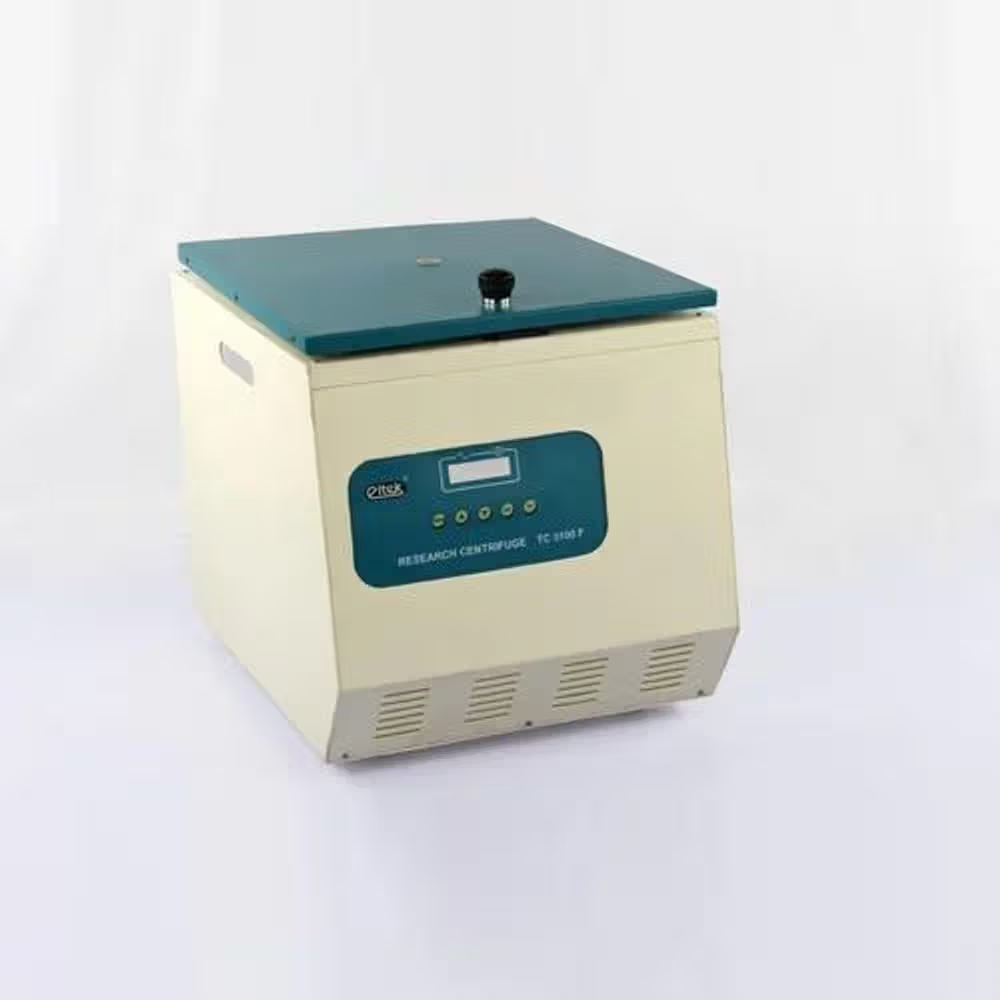
Laboratory centrifuges may be routine instruments, but selecting the right rotor is critical for achieving accurate and efficient results. Centrifuge rotors are broadly classified into three types swinging-bucket, fixed-angle, and vertical rotors each suited to specific centrifugation methods, speeds, and sample volumes. Fixed-angle and swinging-bucket rotors are the most commonly used in benchtop and floor-model centrifuges, while vertical rotors are mainly used in ultracentrifugation.
Swinging-bucket rotors are preferred for low-speed, large-volume separations and applications such as blood sample processing, cell harvesting, and gradient separations, as they maintain sample orientation and allow clean band formation. Fixed-angle rotors are the most widely used and are ideal for routine pelleting and differential separations, offering faster sedimentation due to shorter particle travel distances. Vertical rotors are specialized rotors designed for ultracentrifugation, particularly for density-based separations like DNA banding, where shorter run times and high efficiency are required.
Safety Features Checklist
A reliable centrifuge should include essential safety features to ensure smooth and risk-free operation. These include automatic lid locking to prevent opening during a run, imbalance detection to stop the centrifuge if samples are unevenly loaded, overspeed protection to avoid mechanical failure, and robust rotor recognition for correct operation. Together, these features protect users, samples, and equipment while maintaining consistent performance in the laboratory.
Routine Maintenance Schedule
Proper rotor care is essential for maintaining safety, performance, and long service life. Rotors should be rinsed with water after each use to remove residues, cleaned gently with mild detergent if needed, and thoroughly dried to prevent corrosion or damage. When handling potentially infectious samples, appropriate disinfection should be carried out using cleaning agents compatible with the rotor material, following manufacturer guidelines. Sterilization, most commonly by autoclaving, may be required for high-risk applications.
Routine maintenance should also include inspection and care of rotor components such as O-rings, lid threads, and locking mechanisms. O-rings must be cleaned, dried, relubricated, and replaced if worn or cracked. Lid threads should be kept clean and lightly greased with approved lubricant to ensure smooth operation, while locking mechanisms should be checked regularly for wear or damage. Periodic inspection by trained technicians helps identify early signs of wear, corrosion, or surface damage, allowing timely repair or replacement and reducing the risk of rotor failure.
Related Products

5
Fastest by 8th Apr
COD
Remi Bench Top Clinical Centrifuge
₹8,000
₹10,16921% OFF
₹7,440 with MBFIRST
5
Fastest by 9th Apr
Remi Laboratory Centrifuge
₹39,000
₹49,57621% OFF
₹38,000 with MBFIRST
Fastest by 17th Apr
COD
Labline Centrifuge
₹6,863
₹6,383 with MBFIRST
Fastest by 15th Apr
Eltek Medico 106 Litres Centrifuge
₹10,200
₹11,0167% OFF
₹9,486 with MBFIRST
Fastest by 19th Apr
Eltek Pathological Centrifuge
₹15,360
₹14,360 with MBFIRST


FAQs
SOCIAL MEDIA
DOWNLOAD APP
HELP US IMPROVE
SOCIAL MEDIA
DOWNLOAD APP